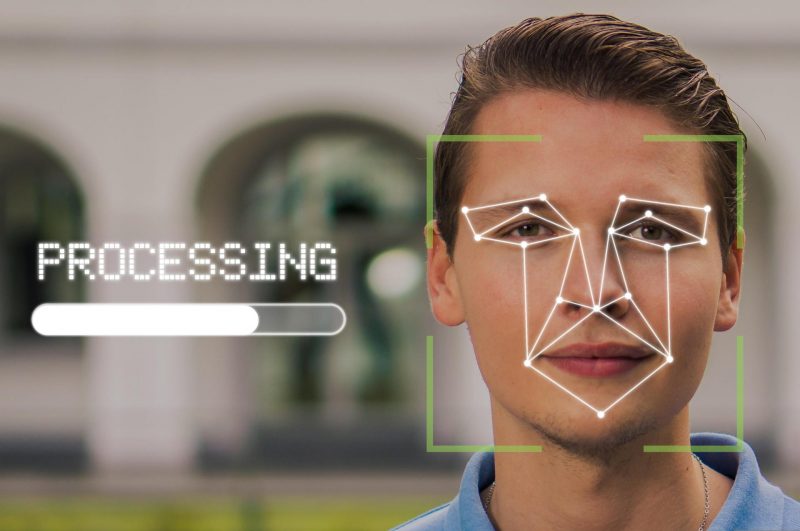
On November 16, the Central Bank of Korea released a research report titled "Artificial Intelligence and Labor Market Changes." The report extensively discusses how artificial intelligence technology is causing industrial transformations and predicts significant changes in the labor market. One notable aspect emphasized in the report is the substantial number of jobs that will be replaced by artificial intelligence.
According to the data presented in the report, it is projected that within the next two decades, approximately 4 million jobs in South Korea may be replaced by artificial intelligence, accounting for around 14% of the country's total employment.
The release of this report has garnered considerable attention, further substantiating the notion that artificial intelligence will reshape labor markets worldwide.
Based on publicly available information, a team from the Bank of Korea has stated that artificial intelligence is particularly adept at handling tasks such as data analysis, posing greater threats to high-income workers with academic backgrounds.
Professions such as doctors, lawyers, accountants, and others within this category are considered to be at the highest risk of being replaced by artificial intelligence. This viewpoint is not limited to the Bank of Korea's report; earlier this year, Goldman Sachs expressed a similar perspective in a significant publication.
Data predictions indicate that artificial intelligence is expected to significantly increase global economic output by approximately 7% within the next ten years. However, it is important to note that this advancement also carries potential risks, as around 300 million jobs worldwide are at risk of being replaced, particularly those involving Generative AI systems like ChatGPT.
On the subject of artificial intelligence replacing human jobs, major research institutions worldwide hold similar views. A report released by McKinsey also presents comparable predictions, highlighting the disruption faced by knowledge workers while anticipating a boost in global productivity.
Of course, not all occupations will be threatened by artificial intelligence. Fields such as food services and education and teaching have relatively low risk of being replaced by artificial intelligence.
When comparing artificial intelligence to human work, it becomes evident that artificial intelligence is significantly more efficient. It can operate continuously without the need for rest, resulting in overall work efficiency that surpasses that of humans.
Moreover, as technology continues to advance and improve, artificial intelligence will become increasingly accurate, especially in processing large amounts of data. Its efficiency and accuracy will far exceed those of humans.
Additionally, artificial intelligence has the ability to continually optimize program settings through deep learning, thereby enhancing its own work innovation.
In a recent speech at the World Artificial Intelligence Conference, Tesla CEO Elon Musk emphasized the significant role that artificial intelligence will play in the future evolution of humanity. He highlighted the explosive growth of digital computing power, with a key indicator being the ratio of digital computing power, machine computing power, and biological computing power.
In essence, as we move forward, the proportion of artificial intelligence in relation to overall intelligence will gradually diminish, leading to fundamental changes in the labor market.
It is important to note that not all jobs will be replaced by artificial intelligence, which is highly unlikely. However, certain jobs that involve high repetition and labor-intensive tasks, such as manufacturing and logistics, are more susceptible to being replaced by artificial intelligence.
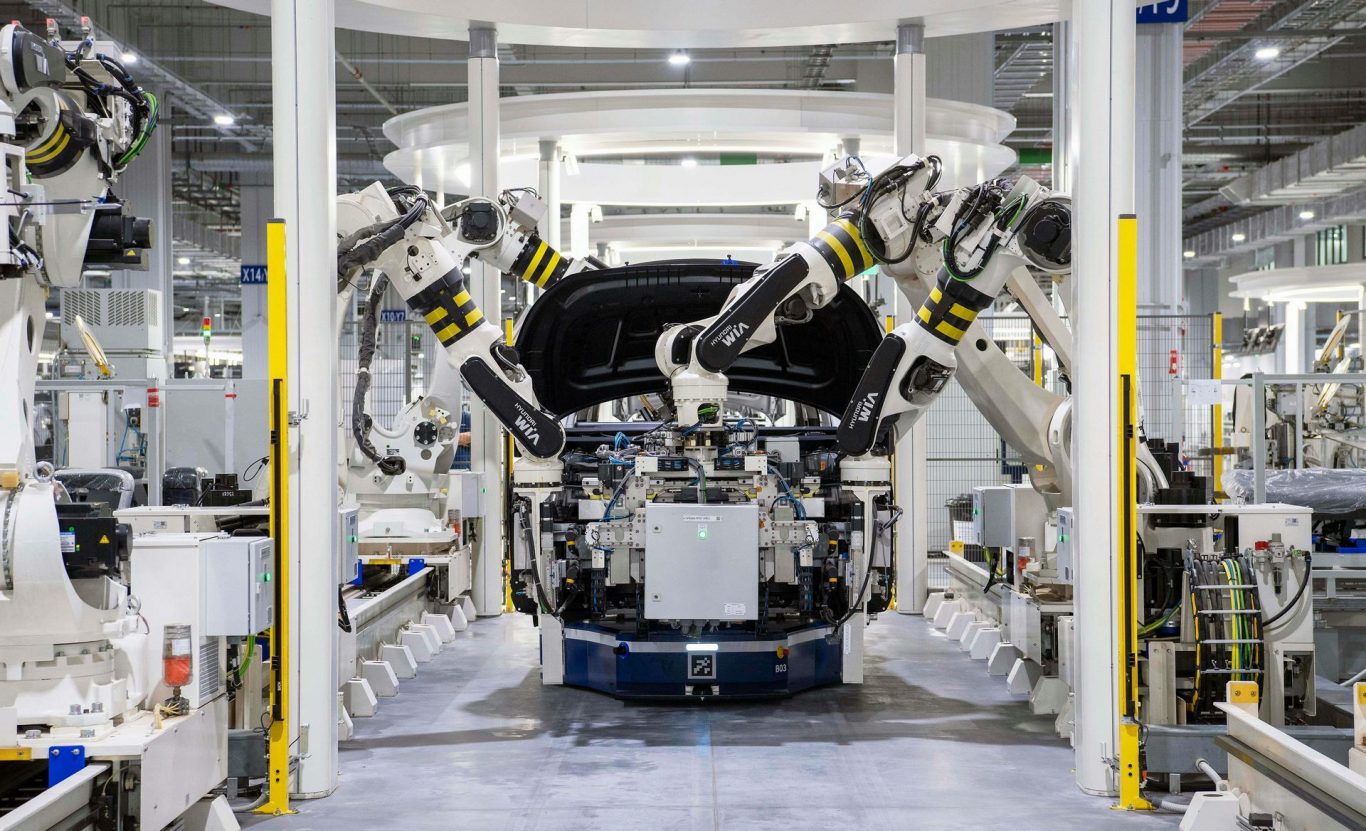 Image Credit: Hyundai Motor Group
Furthermore, generative artificial intelligence is expected to replace a significant number of jobs involving data processing and analysis, such as analysts and data analysts, as well as positions that heavily rely on knowledge and skills. As artificial intelligence continues to advance, this possibility will gradually increase.
While artificial intelligence may replace certain jobs, it is a tool that serves humans, and technological development should ultimately benefit society. The South Korean report highlights the potential replacement of approximately 4 million jobs by artificial intelligence over the next two decades. However, it is crucial to recognize that occupations requiring creativity and innovation still heavily rely on human involvement, such as artists and designers. Artificial intelligence struggles to reach the level of human ingenuity and creativity.
For instance, professions that involve humanistic care and emotional communication, including psychological counselors and kindergarten teachers, necessitate manual intervention. Artificial intelligence lacks emotional understanding and communication capabilities and cannot make judgments regarding moral responsibility. Thus, it is impossible to replace human work in these areas.
As artificial intelligence technology and applications continue to develop, there will be an increasing demand for jobs related to artificial intelligence research, development, and maintenance. Artificial intelligence will also drive the accelerated growth of fields such as data analysis and network security.
Ultimately, this will create a substantial market expansion, including roles such as artificial intelligence consultants, educators, and natural language processing engineers. In specific industry segments, investment and financing activities in the field of artificial intelligence are predominantly concentrated in advanced manufacturing, medical health, and corporate services, accounting for over 20% of the total. With the influx of capital, artificial intelligence technology innovation and progress will be further accelerated.
Bank of Korea Warns of 4,000,000 Jobs to Be Replaced by AI

Tags
With the rapid advancement of large language models, today's most sophisticated artificial intelligence (AI) systems can easily pass the classic Turing Test. This has prompted scientists to reconsider whether new…
Artificial intelligence (AI) is rapidly transforming scientific research. Once limited to analyzing data, AI systems are now able to design experiments and even generate new hypotheses. Some experts believe that,…
According to WIRED, OpenAI is preparing to launch a standalone social app built around its AI video generation model, Sora 2. The app closely mirrors the design and user experience…

Artificial intelligence (AI) is increasingly helping scientists decode how animals communicate and explore the possibility of dialogue across species. Recent studies show that species such as bonobos, chimpanzees, Japanese tits,…

Artificial intelligence (AI) is increasingly accelerating research across multiple disciplines worldwide, particularly in automating the generation of scientific hypotheses. By scanning vast amounts of literature, AI can identify research gaps…

Advances in dataset optimization, computing power, and algorithms have significantly boosted the accuracy of artificial intelligence (AI)-based facial recognition, with most systems now surpassing 99% accuracy in controlled environments and…