AMD has faced significant challenges in the consumer PC market over the past two years. Despite experiencing rapid growth in previous years, both market share and volume have significantly declined. AMD operates in two consumer-level businesses, namely CPUs and GPUs, both of which are facing severe challenges.
While AMD has seen an increase in its share of the server market, it cannot afford to neglect the consumer market. However, in the GPU field, AMD lags behind Nvidia by a considerable margin, both in terms of hardware performance and software ecosystem. On the other hand, the gap between AMD and its competitors in the CPU field is relatively smaller, presenting a significant opportunity for the company.
To gain a larger market share from Intel, AMD has adopted a strategy of segmenting its CPU product line. By offering CPUs with different specifications and prices, AMD caters to the diverse needs of various PC consumer groups. For instance, AMD processors have dominated the market for handheld PCs, which have gained popularity in recent times.
Recent news suggests that AMD has plans to release a range of new processors early next year. These processors will correspond to three product lines, in addition to the recently announced Threadripper series processors. The anticipation surrounding these releases is growing within the CPU market.
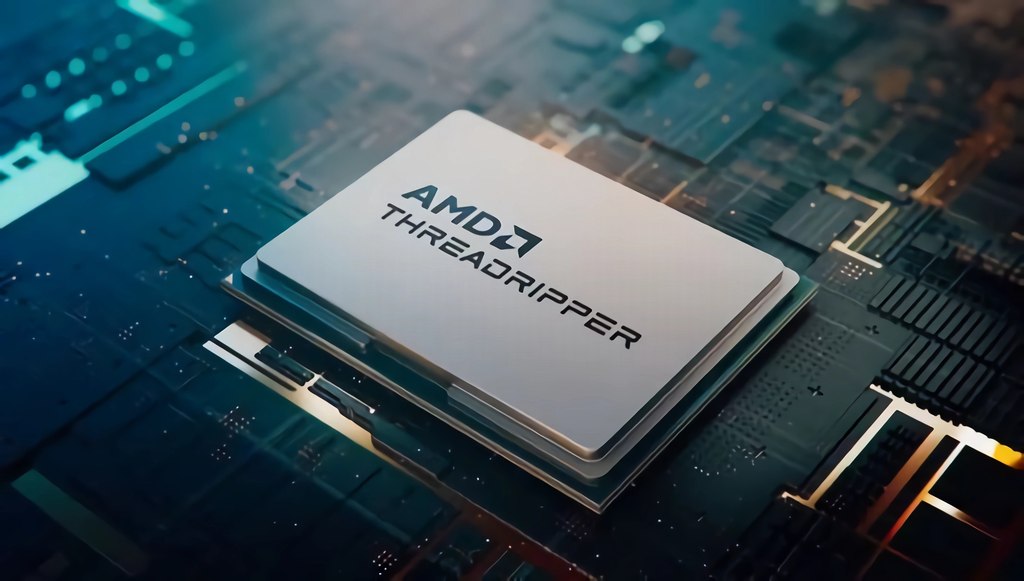
In November 2023, AMD made its first significant update to the consumer server processor series in quite some time. This update, known as the Threadripper product line, introduced a remarkable configuration boasting up to 96 cores and 192 threads. This release caused quite a stir in the consumer market, leaving many in awe. Intel also offers consumer-grade server products, but they currently lag behind AMD's Threadripper series in terms of performance.
Looking ahead to the processors set to be released early next year, they seem to be targeting the mid-to-low-end market, aiming to address Intel's weaker segments. The models that have been revealed include Ryzen 3 8300G, Ryzen 5 8500G, Ryzen 5 8600G, Ryzen 7 8700G, Ryzen 5 5500GT, Ryzen 5 5600GT, Ryzen 7 5700X3D, and Ryzen 7 5700 NPU.
This release includes a total of 8 new processor models, which can be described as a diverse lineup. With the exception of the Ryzen 8000G series, most of these models are based on previous architectures, but they bring improvements in terms of structure and performance.
Let's focus on the Ryzen 8000G series. Based on the specifications, it appears to be a core display version of the Ryzen 7000 series, similar to previous iterations. These processors will be available for desktop and mobile PC markets, with variations in specifications and main frequencies. Notably, there is a significant increase in the main frequency. For example, the Ryzen 7 8700G offers a higher frequency of 5.1GHz compared to the 4.6GHz of the Ryzen 7 5700G, resulting in a 0.4GHz boost to the basic frequency.
Additionally, the core display of the Ryzen 8000G series has been upgraded from the Vega architecture to the RDNA3 architecture, featuring 12 CU units, which is 1.5 times more than what the Ryzen 7 5700G offers. These enhancements, combined with the performance improvements of the RDNA3 architecture, confirm the rumors of a significant performance boost for the Ryzen 8000G series core display.
Considering the hardware specifications alone, the core graphics performance of the Ryzen 7 8700G is expected to surpass that of mainstream entry-level independent graphics. Furthermore, it will support ray tracing, making it suitable for playing independent games or online games without the need for a separate graphics card. As for the remaining models, the exact core display specifications are yet to be revealed, making it difficult to estimate their performance. However, it is likely that they will utilize 8CU and 4CU RDNA3 cores, respectively.
In addition to the Ryzen 8000G series, the other models also deserve attention. Let's start with the Ryzen 5 5600GT/5700GT. It's the first time a Ryzen series processor with the GT suffix has appeared. Although only the model has been revealed, based on the naming convention, it seems to be an overclocked upgraded version of the Ryzen 5 5600G/5500G.
The Ryzen 7 5700X3D is quite surprising. It could be a product developed to further expand the price range. Specific parameters are not yet clear. Lastly, the Ryzen 7 5700 NPU introduces a brand-new suffix. NPU typically refers to a specialized core for AI computing in processors. If the model is genuine, it might be a test product designed by AMD for PC AI functions.
With AMD unveiling so many processors at once and Intel recently releasing the 14th generation Core processors, some users might feel confused about how to choose the right model for their computer needs. So, what should they consider?
In reality, despite the numerous models available, the division of labor among processors remains clear, and there are general selection ranges based on different usage scenarios and budgets. For most users, choosing between Intel and AMD won't significantly impact their experience. The key factors to consider are performance and price, in other words, "cost-effectiveness."
If your needs primarily revolve around daily entertainment, internet access, and you don't intend to play demanding AAA games, both Intel's Core i5 series and AMD's Ryzen 5000G series are excellent choices. Of course, the upcoming Ryzen 8000G series will offer even better performance, but it will likely come at a higher price. If your gaming requirements aren't high, the Ryzen 5000G series is more than sufficient to meet your needs.
 Image Credit: AMD/List of P
Now, let's shift our focus to gaming. For gamers, higher clock speeds translate to better experiences. If budget is not a concern, Intel's i9-14900K is the top recommendation. Additionally, AMD's Ryzen 7 7800X3D and Ryzen 9 7900X3D are also solid choices. Although their clock speeds are lower than the i9-14900K, their large caches are well-suited for gaming. In terms of actual frame rates, they can rival the i9-14900K. If budget is limited, the Ryzen 5 5800X3D is a good alternative.
Beyond gaming, if your primary need is productivity tools and you prioritize higher performance, investing in the Threadripper 7000 series might be a wise decision. Among current consumer-grade processors, no other processor can compete with the Threadripper series in terms of multi-core performance and peripheral function configuration.
In fact, the Threadripper series is derived from AMD's server product line, offering various enterprise-level functional configurations that enable users to build server-grade systems at a more affordable cost. However, it's important to note that most users likely don't require such high performance. If you solely consider multi-core performance, processors like the i9-14900K (or even the 13900K) and Ryzen 7950X are excellent options.
AMD's CPU-Crowd Tactics: Revealing the Power of Ryzen 8000G Series and Beyond
Tags
On February 5 (local time), Qualcomm CEO Cristiano Amon announced that Arm, the chip design company under SoftBank, had withdrawn its breach of contract allegations against Qualcomm and that there…
According to media reports, ASML's CEO, Christophe Fouquet, has announced that Intel has completed the assembly of its second High-NA EUV lithography machine. Christophe Fouquet stated that unlike conventional EUV…

Intel's Chip Foundry Business Reports $7 Billion Loss in 2023, Faces Long Road to Recovery
In a recent filing with the U.S. Securities and Exchange Commission (SEC), Intel revealed concerning financial figures for its chip manufacturing division, Intel Foundry. The document stated that the division's…
Intel introduced the oneAPI toolkit in late 2020, marking its debut as a cross-architecture programming tool. The toolkit aims to simplify programming across various hardware platforms including GPUs, CPUs, FPGAs,…
AMD Updates FreeSync Certification Requirements to Reflect Latest Gaming Standards and Technology
AMD has announced updates to its FreeSync certification requirements, which will result in a significant reduction in the number of 1080P and 1440P monitors that support FreeSync. FreeSync was introduced…

Biden Administration Negotiating $10 Billion Subsidy Deal with Intel to Boost US Semiconductor Manufacturing
Bloomberg has reported that the Biden administration in the United States is currently in negotiations to provide Intel Corporation with over $10 billion in subsidies. If successful, this funding award…