The World Bank has revised upward its forecast for China's economy, now expecting GDP growth of 4.8% in 2025 and 4.2% in 2026, compared with its April projection of 4.0% for both years. The upgrade reflects strong export performance and resilient manufacturing, though the outlook also factors in an anticipated slowdown in export growth, reduced fiscal support, and persistent structural headwinds.
The broader East Asia and Pacific region is likewise projected to grow 4.8% in 2025, with Vietnam leading at 6.6%, followed by Mongolia at 5.9% and Palau at 5.7%. Despite outperforming much of the global economy, the region faces risks from rising policy uncertainty, trade barriers, and political instability, which have dampened business and consumer confidence.
World Bank Vice President Carlos Felipe Jaramillo highlighted a "jobs paradox", noting that strong growth has not translated into enough high-quality employment. The report calls for policy reforms to ease market entry, spur private-sector job creation, and encourage investment in human capital and digital infrastructure, while better aligning workers' skills with evolving economic demands.
World Bank Raises China's Growth Outlook, Warns of Regional Challenges

Tags
US-based biotech company Advanced Aesthetic Technologies (AAT) has introduced its agarose-based facial filler, Algeness VL, to China's fast-expanding medical aesthetics market, marking a new milestone in facial contouring and reconstruction…

China, the United States' third-largest creditor, reduced its holdings of US Treasury securities in July to the lowest level since 2009, according to the latest data. The country trimmed its US…

Despite ongoing U.S. export restrictions on advanced computing chips, China has emerged as the global leader in artificial intelligence (AI) research, according to a new report from the Dimensions database…

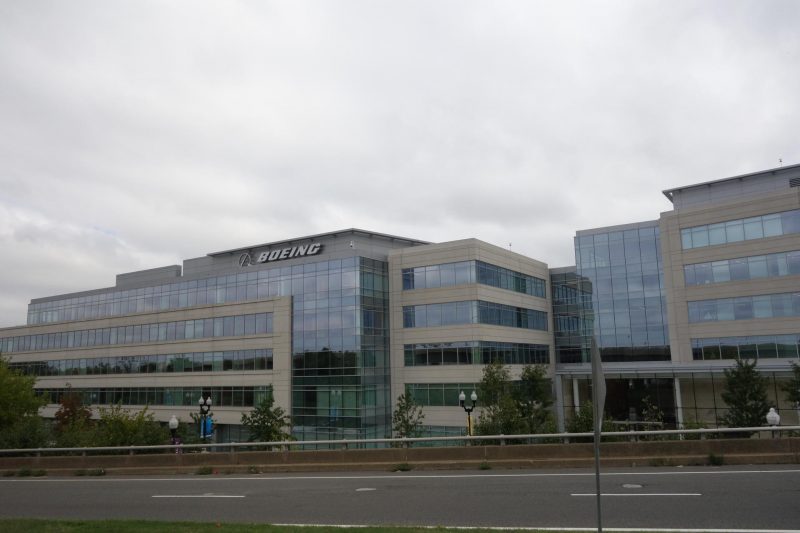
The United States has approved the resumption of aircraft component exports to China, allowing American aerospace firms, including GE Aerospace, to once again supply key parts. Boeing has also resumed…
The University of Hong Kong (HKU) has surpassed Peking University (PKU) in the latest QS World University Rankings, becoming the highest-ranked Chinese institution and marking a significant achievement for the…