From the African tropics to the South Pacific, weaver ants build intricate multi-layered nests by bending and binding living leaves. A new study reveals that when working together, these ants achieve extraordinary strength, overturning conventional human assumptions about teamwork efficiency.
Experiments showed that a single weaver ant can pull an object weighing up to 60 times its body mass. In a group, however, each ant's average pulling force surged to 103 times its body weight. This “super-efficiency” stems from their adhesive footpads and precisely coordinated limb movements. During construction, ants form chain-like structures: the lead ant bends a leaf by pulling with its legs, while following ants grasp the waist of the one ahead and extend their legs to provide stable support—creating a ratchet-like mechanical effect that amplifies force throughout the chain.
The findings challenge the classic "Ringelmann effect", which predicts reduced efficiency in human group tasks due to diminished motivation or coordination. While similar “super-efficient” behaviors have been noted in other social insects like army ants, this is the first precise measurement of individual contributions within weaver ant groups.
The research—conducted by Macquarie University (Australia) and Imperial College London, among others—was published in Current Biology. The team now aims to explore the biomechanical principles behind the ants' coordination, which could inspire swarm robotics and collaborative heavy-lifting systems. Beyond revealing the ingenuity of nature's architects, the study offers fresh insights for artificial intelligence and bio-inspired engineering.
Weaver Ants Defy Teamwork Limits with "Super-Efficient" Cooperation
Published on Aug 14, 2025
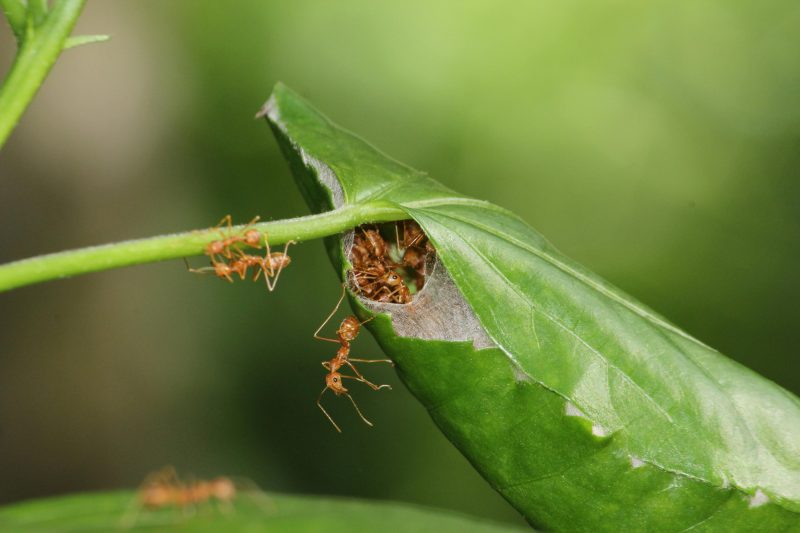
Image Credit: Dibakar Roy
Tags
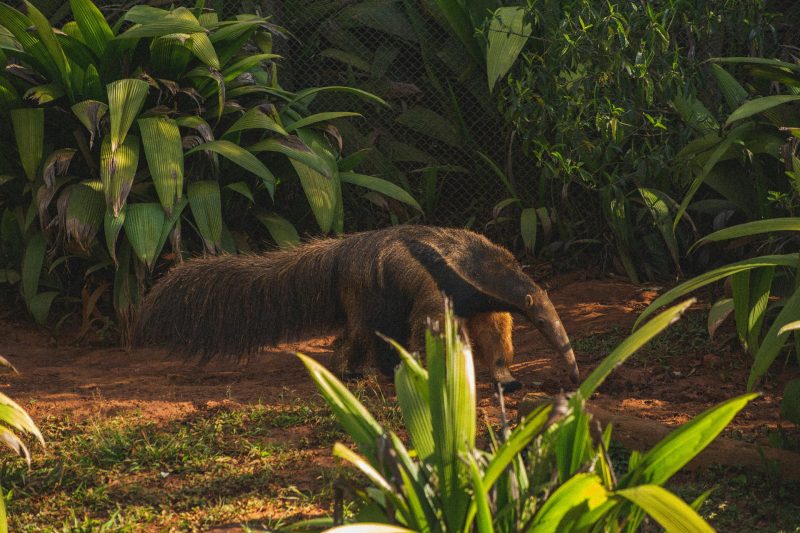
Mammals Have Evolved Ant- and Termite-Eating Adaptations at Least 12 Times Since Dinosaur Extinction
Jul 29, 2025
Since the extinction of non-avian dinosaurs 66 million years ago, mammals have independently evolved specialized adaptations for feeding on ants and termites at least 12 times. This finding, published in…
In the forests of the lowlands in South Asia, bird species are diverse, yet insect-eating bird species are relatively scarce. A study published last month in "Ecology Letters" may shed…