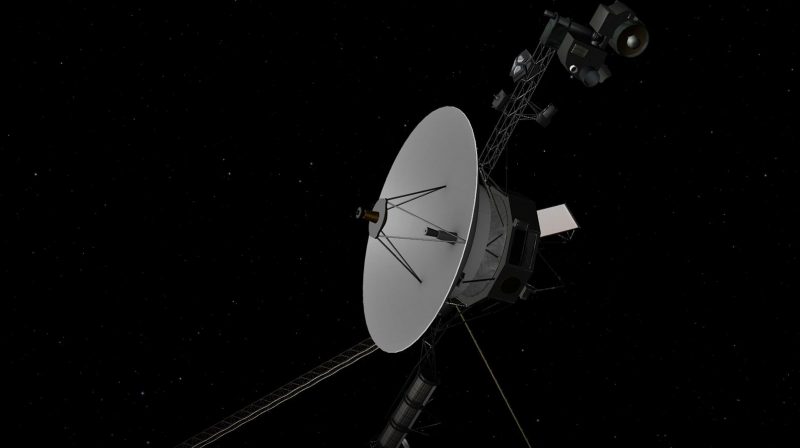
The future of the Voyager 1 spacecraft is uncertain as it continues to experience communication issues, raising concerns among scientists. Despite these challenges, the National Aeronautics and Space Administration (NASA) remains determined to salvage the probe and its historic mission.
Having spent 45 years in space, Voyager 1 has achieved remarkable milestones, such as venturing beyond the edge of our solar system and becoming the first human-made object to enter interstellar space. It has provided groundbreaking insights into Jupiter and Saturn, while capturing awe-inspiring images of our own planet. However, in the vast expanse of deep space, millions of kilometers away from Earth, a struggling and aging spacecraft losing communication can evoke a sense of isolation.
Over the past few months, NASA's Voyager 1 probe has encountered frequent malfunctions, resulting in the transmission of erroneous data to ground control centers. Engineers at NASA's Jet Propulsion Laboratory (JPL) are diligently working to identify and resolve the issue. However, due to the immense distance between the spacecraft and Earth, progress is painstakingly slow. The situation appears less than optimistic, and it is uncertain whether Voyager 1's exploration mission can continue. Nevertheless, NASA remains resolute in its commitment to the furthest-reaching spacecraft in its fleet.
A spokesperson from JPL emphasized that the team is actively gathering information and preparing to employ various strategies in their pursuit of identifying the root cause and potential solutions to the problem.
The anomaly may be linked to the probe's Flight Data System (FDS), responsible for collecting data from Voyager 1's scientific instruments, integrating it with engineering data on the spacecraft's operational status, and transmitting it back to Earth as binary codes through the Telemetry Modulation Unit (TMU) on the probe. It is suspected that a communication failure between the FDS and TMU may be causing the TMU to transmit confusing binary signals (0s and 1s) to the ground control center.
The issue initially surfaced in May 2022 when the Attitude Control System (AACS) data returned by Voyager 1 suddenly became garbled and unreadable. Engineers successfully resolved the problem by sending instructions to another computer on the spacecraft and recalibrating the telemetry data transmission. However, by December 2023, Voyager 1 began transmitting disorganized data once again.
Presently, the Voyager 1 probe is located approximately 15.14 billion miles away from Earth, traversing interstellar space at a speed of 38,000 miles per hour. Due to the vast distance separating the ground control center and Voyager 1, it takes roughly two days for JPL engineers to send a signal and receive a response.
Voyager 1 was launched into space in 1977, just weeks after its sibling probe Voyager 2, and took a different trajectory, allowing it to pass through the asteroid belt before Voyager 2. It conducted close encounters with Jupiter and Saturn, unveiling two new moons of Jupiter, five new moons of Saturn, and a previously unknown ring named the G ring. In August 2012, Voyager 1 crossed the boundary of the solar system, marking its entry into interstellar space and earning the distinction of being the first human-made object to achieve this remarkable feat.
Voyager 1 Faces Communication Challenges in Deep Space Mission
Tags
Artificial intelligence (AI) is increasingly helping scientists decode how animals communicate and explore the possibility of dialogue across species. Recent studies show that species such as bonobos, chimpanzees, Japanese tits,…
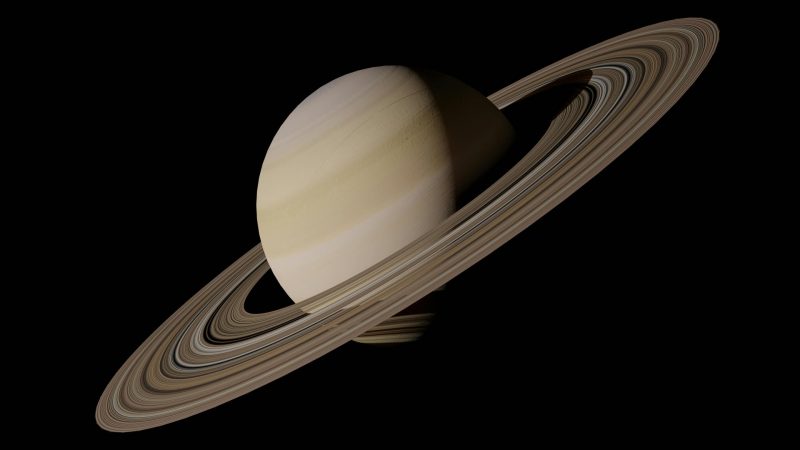
A new NASA study indicates that Saturn's largest moon, Titan, may host naturally forming primitive cell-like structures called vesicles within its liquid hydrocarbon lakes. The finding offers fresh insight into…
Hearing loss not only impairs auditory function but may also reshape how individuals interact with the world. A new study by the Keck School of Medicine at the University of…
Researchers at Carnegie Mellon University have developed “Zippy”, the world's smallest self-powered bipedal robot. Standing just 1.5 inches tall, Zippy can walk at over 0.5 miles per hour and is…
The University of Hong Kong (HKU) has surpassed Peking University (PKU) in the latest QS World University Rankings, becoming the highest-ranked Chinese institution and marking a significant achievement for the…

Over 80 exhibitors are showcasing more than 1,000 products — including Japanese sake, plum wine, and beer — at the ongoing Japan Sake Month, the largest Japanese sake trade fair…