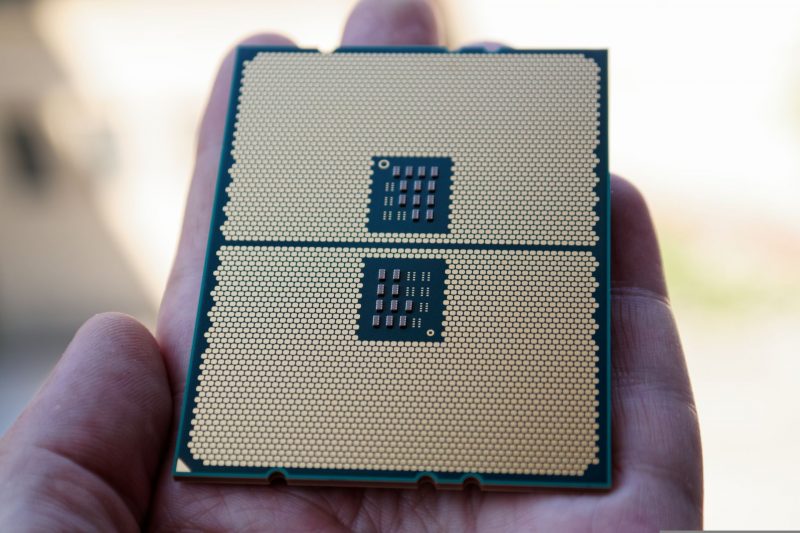
Silicon-based computer chips have been a cornerstone of computing for over 50 years. With the smallest feature size on chips currently at around 3 nanometers, advancements in chip technology are crucial to meet the growing demand for increased memory and processing power. However, traditional chip materials and processes are nearing their limits in terms of achievable feature sizes.
To tackle this challenge, researchers at the U.S. Department of Energy's Princeton Plasma Physics Laboratory (PPPL) are leveraging their expertise in physics, chemistry, and computer modeling to develop the next generation of computer chips. Their aim is to discover new processes and materials capable of producing chips with even smaller feature sizes.
In collaboration with scientists from various institutions, PPPL researchers are focusing on a two-dimensional material called a transition metal dichalcogenide (TMD) as a potential replacement for silicon. Their recent study, published in the journal 2D Materials, delves into the atomic structural changes that occur in TMDs, their causes, and their impact on the material's properties. This valuable information serves as the groundwork for developing improved manufacturing processes necessary for the production of next-gen computer chips. The ultimate objective is to design plasma-based manufacturing systems capable of precisely fabricating TMD-based semiconductors to meet specific application requirements.
Scientists Study Replacing Silicon with 2D Materials in Next-Gen Computer Chips
Tags
Webb Telescope Detects Silane in Ancient Brown Dwarf, Shedding Light on Planetary Atmospheres
Astronomers using the James Webb Space Telescope have, for the first time, conclusively detected silane molecules in the atmosphere of an ancient brown dwarf known as "The Accident." The finding,…

MIT's Breakthrough Integrates GaN Transistors into Silicon Chips for Low-Cost, High-Performance Electronics
Gallium nitride (GaN), the world's second most widely used semiconductor after silicon, offers unique advantages for applications in lighting, radar systems, and power electronics. However, its high cost and complex…

Breakthrough Silicon-Based Polymer Exhibits Semiconductor Properties, Paving Way for Flexible Electronics
A research team from the University of Michigan has made a groundbreaking discovery: a novel silicon-based material that exhibits semiconductor properties—an unprecedented feat for this class of compounds. The findings…
Microchips are very small devices that make our electronic gadgets work. They are made from sand that has a lot of silicon in it. And silicon is a special…