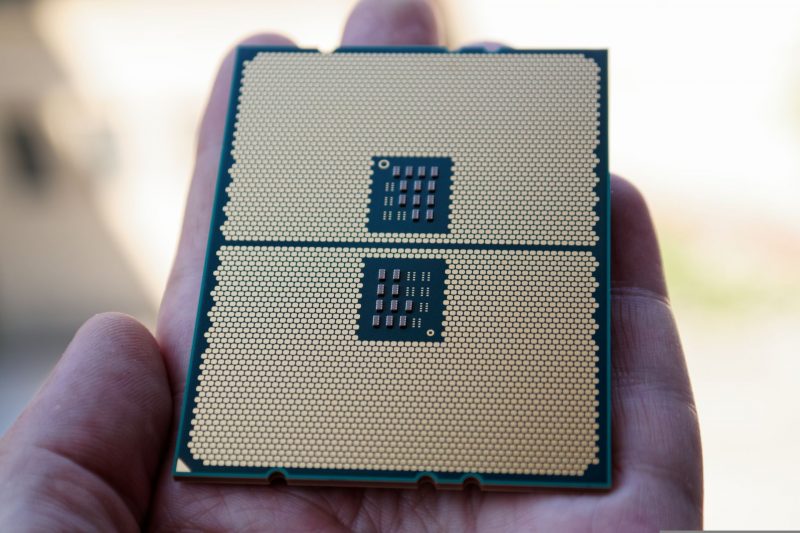
Microchips are very small devices that make our electronic gadgets work. They are made from sand that has a lot of silicon in it. And silicon is a special material, which can be used to control electricity.
To make microchips, we have to separate silicon from oxygen and make it very pure. Then we use a crystal to grow a long tube of silicon and cut it into thin slices. These slices are called wafers and they are the base of microchips. We have to keep them very clean because any dirt can ruin them.
Then we use light and chemicals to draw tiny patterns on the wafers. These patterns are like the blueprints of the microchip. They create different parts that can store, control, or change electricity. We can repeat this process many times to make more complex microchips.
We also use metal and glass to connect the parts and protect them. Then we test each microchip to see if it works well and cut it out from the wafer. Microchips have many transistors, which are the main parts that can switch or boost electricity. The more transistors a microchip has, the more powerful it is.
We have been making transistors smaller and smaller so we can fit more of them on a microchip. This makes our electronic gadgets faster and better. In the past, microchips had only a few transistors, but now they can have billions of transistors on a single microchip. This has allowed us to create more powerful computers, smartphones, and other devices.
Making microchips is very difficult. Scientists and engineers are constantly working to develop new materials and improve the manufacturing process. Now microchips have been used in medical devices and self-driving cars. It will continue playing a key role in shaping the future.

Tags
Webb Telescope Detects Silane in Ancient Brown Dwarf, Shedding Light on Planetary Atmospheres
Astronomers using the James Webb Space Telescope have, for the first time, conclusively detected silane molecules in the atmosphere of an ancient brown dwarf known as "The Accident." The finding,…

MIT's Breakthrough Integrates GaN Transistors into Silicon Chips for Low-Cost, High-Performance Electronics
Gallium nitride (GaN), the world's second most widely used semiconductor after silicon, offers unique advantages for applications in lighting, radar systems, and power electronics. However, its high cost and complex…

Breakthrough Silicon-Based Polymer Exhibits Semiconductor Properties, Paving Way for Flexible Electronics
A research team from the University of Michigan has made a groundbreaking discovery: a novel silicon-based material that exhibits semiconductor properties—an unprecedented feat for this class of compounds. The findings…
Silicon-based computer chips have been a cornerstone of computing for over 50 years. With the smallest feature size on chips currently at around 3 nanometers, advancements in chip technology are…