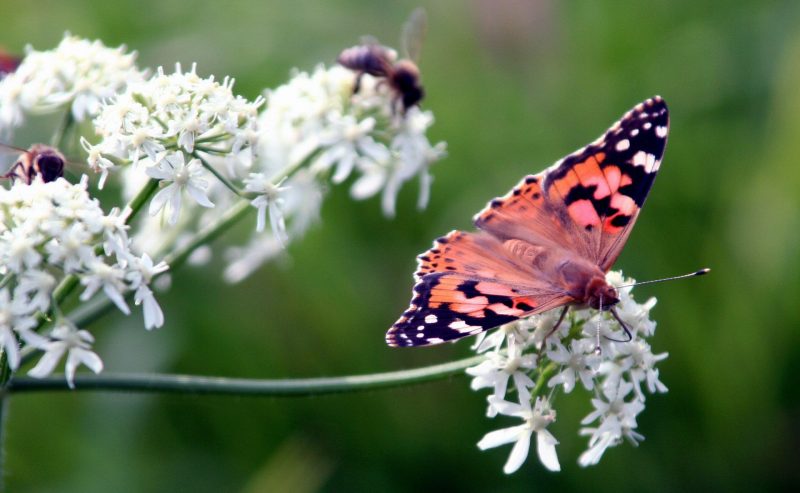
A recent study published in Nature Communications reveals that increased levels of ozone pollution are causing the breakdown of pheromones released by potential mates, leading insects to seek mates within their own species.
Ground-level ozone, a greenhouse gas formed when vehicle emissions react with other gases in the air, rises during hot summer months due to sunlight and high temperatures.
Researchers at the Max Planck Institute for Chemical Ecology in Germany, led by Markus Knaden, made a significant discovery last year, showing that ozone interacts with insect chemical signals known as pheromones. Pheromones are vital for insect mating, and the team found that male flies became less attractive to female flies in the presence of higher ozone levels. Building on this finding, the researchers investigated whether this breakdown of pheromones affected the flies' ability to differentiate between various species.
Their study focused on four closely related species of fruit flies, including Drosophila melanogaster. Male and female fruit flies were exposed to high levels of ozone, simulating conditions comparable to hot urban weather, for up to 2 hours. The researchers then examined the females' preference to mate with males of the same species or a different species. The results showed that after ozone exposure, the probability of producing hybrid offspring increased to about 70%, while the control group exposed to ambient air had only a 20% probability of producing hybrid offspring.
Knaden highlighted that hybrid offspring often face sterility issues, rendering them unable to pass on their genes despite the significant investment made by the flies in their offspring. Currently, there are over 1,500 chemically described insect pheromones, with 90% of them possessing carbon-carbon double bonds susceptible to ozone degradation. Consequently, the rising levels of surface ozone could further contribute to the alarming decline of insect populations worldwide.
Ozone Pollution Impacts Insect Mating and Hybrid Offspring
Tags
Recent studies reveal that insect populations are rapidly decreasing, sparking widespread concern about the environmental and ecological implications. While intensive agriculture has often been identified as a leading cause, a…
Researchers at the Massachusetts Institute of Technology (MIT) are developing robotic insects that could one day swarm out of mechanical hives to efficiently and precisely pollinate fruits and vegetables. The…
Hemolymph, the blood-like fluid found in invertebrates like insects, lacks red blood cells, hemoglobin, and platelets. Instead, it contains hemocytes, amoeba-like cells. One intriguing aspect of hemolymph is its ability…
Scientists from the United Kingdom and the United States have made a significant discovery regarding the impact of artificial light on insects. Their research suggests that artificial light disrupts insects'…

For millions of years, plants and pollinating insects have maintained a symbiotic relationship. Plants produce nectar to attract insects for pollination, while insects facilitate the pollination process for plants. However, scientists…