For millions of years, plants and pollinating insects have maintained a symbiotic relationship. Plants produce nectar to attract insects for pollination, while insects facilitate the pollination process for plants.
However, scientists from the French National Center for Scientific Research (CNRS) and the University of Montpellier have made an intriguing discovery. They found that flowering plants in agricultural fields are becoming less dependent on insect pollination. As the population of pollinating insects declines, these flowering plants face greater challenges in reproduction, consequently evolving towards self-pollination. The results of this research were published on December 19th in the journal "New Phytologist".
The research team compared the pansies currently growing in the same area as those that thrived in the Paris region 20 to 30 years ago. They observed a 10% reduction in flower size and a 20% decrease in nectar production in the present pansies. Additionally, there were fewer visits from pollinating insects.
This trend is believed to be a consequence of the declining population of pollinating insects in Europe. A study conducted in a nature reserve in Germany revealed that over the past 30 years, more than 75% of flying insect biomass has vanished from the area. Similar reports of declining insect populations have surfaced in various regions worldwide over the past 50 years.
The research findings indicate the existence of a detrimental cycle: the decline in pollinating insects leads to reduced nectar production, which, in turn, exacerbates the decrease in insect populations. The researchers emphasize the urgency of implementing measures to address this phenomenon and safeguard the mutually beneficial relationship between plants and pollinating insects that has persisted for millions of years.
Tags
California's deserts, once thought to be naturally resistant to plant invasions, are now under severe threat from an aggressive weed—Sahara mustard (Brassica tournefortii). A recent study by the University of…

Recent studies reveal that insect populations are rapidly decreasing, sparking widespread concern about the environmental and ecological implications. While intensive agriculture has often been identified as a leading cause, a…
A research team from the Technical University of Munich is exploring ways to optimize the lifespan of plant enzymes. Certain plant enzymes have a short lifespan and require frequent replacement,…
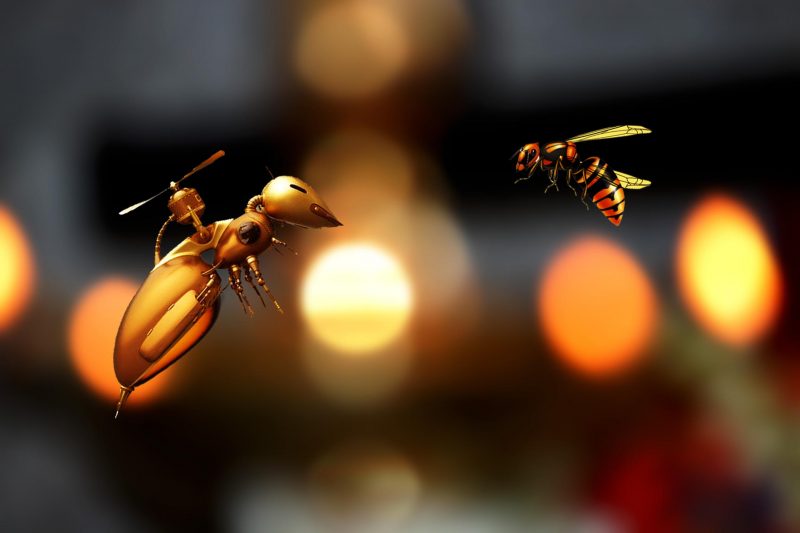
Researchers at the Massachusetts Institute of Technology (MIT) are developing robotic insects that could one day swarm out of mechanical hives to efficiently and precisely pollinate fruits and vegetables. The…
In the past decade, the global plant-based beverage market has witnessed significant growth, with oat, almond, soy, and other plant-based drinks gradually becoming popular alternatives to dairy milk. Millions of…

Discovery of Gene Enhancing Photosynthesis in Poplar Trees Holds Promise for Agriculture and Bioenergy
Researchers at the University of Illinois, in collaboration with the Bioenergy Innovation Center at Oak Ridge National Laboratory in the United States, have discovered a gene in poplar trees that…