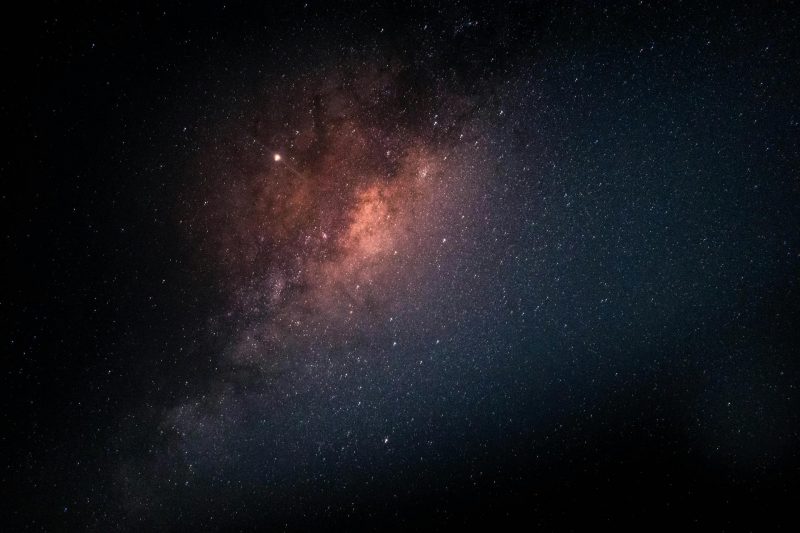
Scientists have captured the most detailed image yet of the universe just 380,000 years after the Big Bang, using the Atacama Cosmology Telescope (ACT). This groundbreaking observation reveals the motion and polarization of the universe's earliest light, enhancing our understanding of the cosmic microwave background (CMB) and confirming fundamental theories about the universe's structure and expansion. The findings set a new benchmark for observational cosmology.
The light detected by ACT has traveled for over 13 billion years to reach Earth, offering a rare glimpse of the universe in its infancy. With a resolution five times greater than that of the Planck satellite, ACT was able to directly detect faint polarization signals—subtle patterns in light that trace the motion of primordial hydrogen and helium gases. These polarization patterns provide valuable insight into the distribution of gravity in the early universe.
The new results support a simple and consistent model of the universe, effectively ruling out most competing alternative theories. The research team is expected to present these findings at the upcoming American Physical Society annual meeting. The CMB represents the earliest observable stage in cosmic history, often described as the universe's “baby picture.” These new images reveal minute fluctuations in gas density and velocity, which later evolved over millions to billions of years into stars and galaxies.
ACT's measurements also offer a remarkably precise estimate of the universe's age—13.8 billion years—with an uncertainty of just 0.1%. Additionally, the team has measured the Hubble constant—the rate of cosmic expansion—with greater accuracy, producing results that align closely with previous CMB-based estimates and further reinforce the standard cosmological model.
New Cosmic Map Reveals Sharpest-Ever Glimpse of the Infant Universe
Tags
A new type of hollow-core optical fiber could dramatically enhance both data capacity and transmission distance in a single strand, paving the way for faster and more efficient telecommunications networks.…

Why do bats frequently collide with wind turbines? A new scientific study points to visual misperception as a key factor. While the impact of turbines on birds has long been…

A new study published in Science reveals that artificial night lighting significantly prolongs daily birdsong, marking the first global-scale validation of this phenomenon. Researchers from Oklahoma State University and Southern Illinois…

Recent astronomical observations suggest that dark energy—the mysterious force driving the accelerated expansion of the universe—may not be constant, a revelation that could reshape the foundations of modern physics. An international…

Circularly polarized light, either left-handed or right-handed, is an electromagnetic wave that rotates clockwise or counterclockwise during propagation. It plays a vital role in medical imaging and advanced communication technologies.…