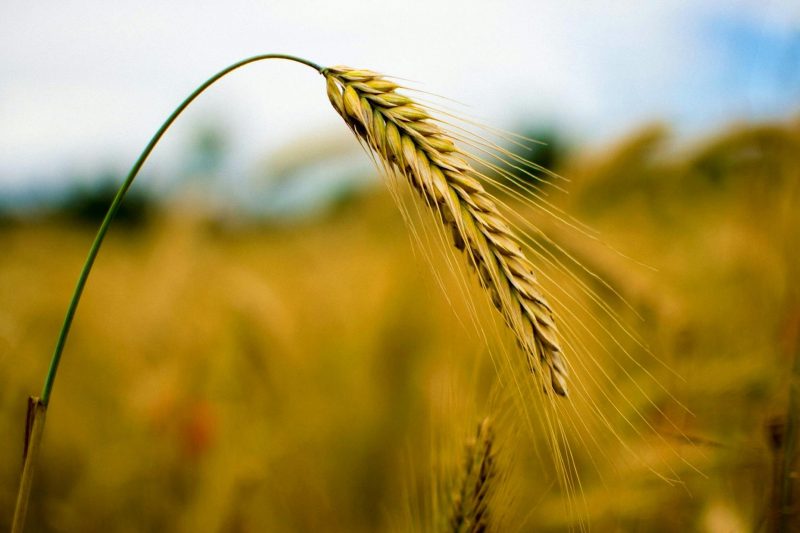
Chinese researchers have identified a gene that significantly improves rice resilience to extreme heat without compromising yield or grain quality—a breakthrough that could safeguard rice production in warming climates.
The gene, QT12, was discovered by researchers at Huazhong Agricultural University in Wuhan and published last Wednesday in the journal Cell. Under high temperatures, QT12 works with the NF-Y protein complex to stabilize starch and protein synthesis in rice grains, effectively acting as a “firewall” against heat damage.
Large-scale field trials conducted during last year's heatwaves in the Yangtze River basin showed remarkable results. When inserted into the hybrid rice variety Huazhan, QT12 boosted yields by 49.1% in Wuhan, 77.9% in Hangzhou, and 31.2% in Changsha, while also enhancing grain quality.
As the Yangtze River basin accounts for roughly two-thirds of China's rice output, this innovation offers a promising molecular solution to protect food security amid rising temperatures. The research team is now working with domestic companies to accelerate the gene's application in rice breeding programs.
Key Gene Discovery Boosts Rice Heat Tolerance and Yield
Tags
US-based biotech company Advanced Aesthetic Technologies (AAT) has introduced its agarose-based facial filler, Algeness VL, to China's fast-expanding medical aesthetics market, marking a new milestone in facial contouring and reconstruction…

A large-scale genetic study published in Nature Medicine has uncovered a surprising paradox: a gene mutation known to cause severe obesity appears to significantly reduce the risk of heart disease…

Humans can distinguish up to a trillion different odors—yet this remarkable ability relies on only about 400 types of olfactory receptor proteins. Because these receptors are notoriously difficult to express…

Global conservation groups, scientists and beekeepers are sharply divided over whether to ban the deliberate release of genetically engineered organisms into the wild. Dozens of NGOs have urged the International…

The World Bank has revised upward its forecast for China's economy, now expecting GDP growth of 4.8% in 2025 and 4.2% in 2026, compared with its April projection of 4.0%…

Single-Cell Sequencing Maps Plant Stem Cell Networks, Opening Path to Higher Crop Yields
Plant stem cells are the foundation of agriculture, underpinning the production of food, feed, and biofuels. Yet the core genetic networks controlling their activity have remained poorly understood. A research…