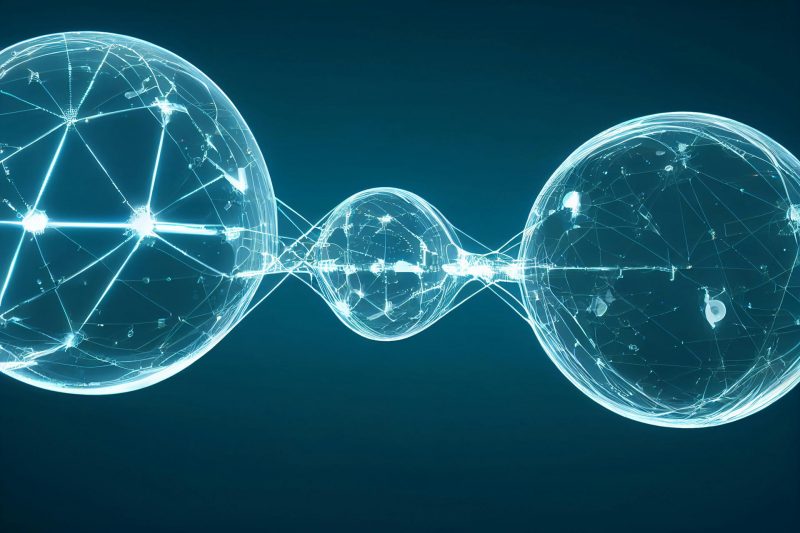
Researchers at the University of Texas at Dallas have discovered that mixing microscopic particles of two different solid-state electrolytes creates a “space charge layer” at the interface—an accumulation of ions that significantly enhances ion transport efficiency. This breakthrough offers a novel strategy for designing next-generation solid-state batteries, with potential applications in mobile devices and electric vehicles. The study was recently published in ACS Energy Letters, a leading journal in materials science.
The team found that when two solid electrolytes come into contact, differences in their chemical potential drive ions to accumulate at the interface, forming unique ion-conducting pathways. This synergistic effect, akin to combining ingredients for better overall performance, results in superior conductivity compared to single-material systems. The discovery paves the way for scientists to engineer advanced solid electrolytes by strategically combining materials.
While conventional lithium-ion batteries—common in consumer electronics—rely on flammable liquid electrolytes and are nearing their theoretical performance limits, solid-state batteries promise safer operation and potentially double the energy density. However, poor ion mobility has remained a key technical challenge. By studying combinations like lithium zirconium chloride and lithium yttrium chloride, the researchers have identified a mechanism for enhancing ionic activity, offering theoretical guidance for future battery innovation.
Interfacial Charge Layer Discovery Boosts Solid-State Battery Performance
Tags
For years, biochar was seen mainly as a passive material—removing contaminants from water by adsorption or serving as a support for catalysts. However, new research has revealed that biochar itself…

Researchers at King Abdullah University of Science and Technology (KAUST) have discovered that adding inexpensive salts, such as zinc sulfate, to aqueous rechargeable batteries can dramatically extend their lifespan—by more…
Transistors, hailed as one of the greatest inventions of the 20th century, are the fundamental building blocks of modern electronic devices. However, as electronic components continue to shrink in size,…
Neutrinos—elusive fundamental particles generated in radioactive decay, solar activity, and cosmic events—are renowned for their extremely small mass. Now, new results suggest they may be even lighter than previously thought. The…
Korean Scientists Develop Radioactive Carbon Micro-Nuclear Battery with Enhanced Efficiency
Korean researchers are developing a micro-nuclear battery powered by radioactive carbon, which generates electricity through beta radiation-induced electron avalanche. This innovative technology is designed to be both environmentally friendly and…