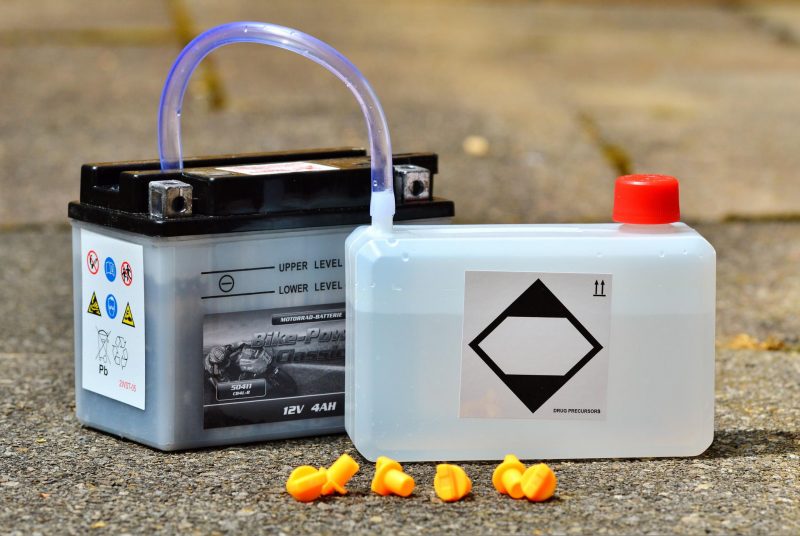
Researchers at King Abdullah University of Science and Technology (KAUST) have discovered that adding inexpensive salts, such as zinc sulfate, to aqueous rechargeable batteries can dramatically extend their lifespan—by more than ten times—by suppressing harmful internal reactions. The findings are published in Science Advances.
Aqueous batteries are considered a promising option for sustainable energy storage due to their low cost and high safety. However, their longevity is often limited by degradation of the anode, the component responsible for chemical reactions that generate and store energy. Certain parasitic reactions damage the anode, significantly shortening battery life.
The study identified free water molecules—those not tightly bound to other molecules—as the key trigger for these parasitic reactions. Adding sulfate stabilizes the structure of water molecules, reducing the reactivity of free water and thus inhibiting these detrimental processes. This stabilizing mechanism is referred to as the "hydrogel effect".
While most of the experiments focused on zinc sulfate-based batteries, early evidence suggests sulfate additives are also effective for other metal anodes, indicating broad applicability across aqueous battery types. Given the low cost and wide availability of sulfates, the approach is both scientifically sound and economically feasible.
Low-Cost Salt Additives Boost Aqueous Battery Lifespan Tenfold
Tags
A new study has revealed that the nematode Caenorhabditis elegans—a microscopic worm widely used in research—can pass longer lifespans to its offspring through epigenetic mechanisms, even when the descendants themselves…

Researchers at the University of Texas at Dallas have discovered that mixing microscopic particles of two different solid-state electrolytes creates a “space charge layer” at the interface—an accumulation of ions…
Korean Scientists Develop Radioactive Carbon Micro-Nuclear Battery with Enhanced Efficiency
Korean researchers are developing a micro-nuclear battery powered by radioactive carbon, which generates electricity through beta radiation-induced electron avalanche. This innovative technology is designed to be both environmentally friendly and…

A research team at Rice University has developed a groundbreaking lithium extraction method to meet the world's growing demand for lithium, a critical component of electric vehicle batteries. This innovation…
A research team from the Technical University of Munich is exploring ways to optimize the lifespan of plant enzymes. Certain plant enzymes have a short lifespan and require frequent replacement,…