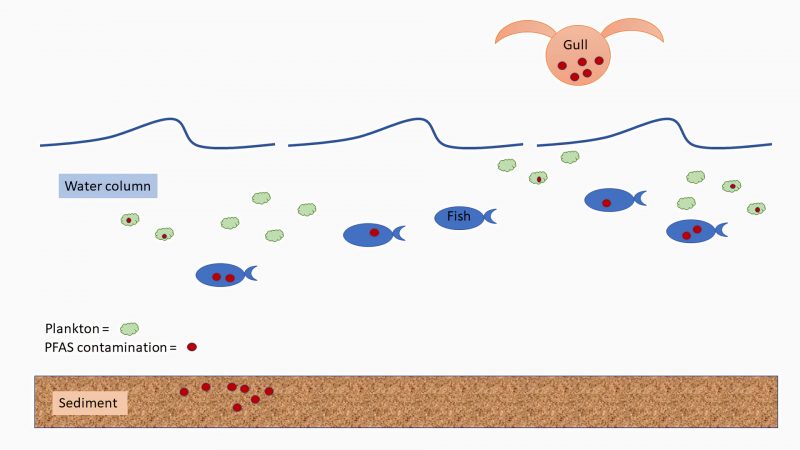
Perfluoroalkyl substances (PFAS) are persistent environmental pollutants that resist decomposition. They accumulate in water, soil, and organisms, posing significant risks such as carcinogenesis and hormone disruption. These chemicals have been detected in various environments, including Antarctic drinking water, food, and soil.
Efforts to phase out PFAS production face challenges due to their high thermal stability, necessitating temperatures exceeding 400°C for decomposition. Consequently, products containing PFAS often end up in landfills, potentially contaminating the environment in the long term.
In a groundbreaking development, researchers at Ritsumeikan University in Japan have introduced a novel room-temperature defluorination method that could transform PFAS management practices. Published in Angewandte Chemie International Edition, the study presents a photocatalytic process utilizing visible light to break down PFAS and other fluorinated polymers (FPs) into fluoride ions at ambient conditions. Remarkably, the researchers achieved complete defluorination of perfluorooctane sulfonic acid (PFOS) within eight hours of light exposure.
The method involves illuminating cadmium sulfide (CdS) nanocrystals and copper-doped CdS (Cu-CdS) nanocrystals, which are coated with mercaptopropionic acid (MPA) ligands. This is done in a solution containing PFAS, FPs, and triethanolamine (TEOA). The semiconductor nanocrystals, when irradiated, produce high-reduction-potential electrons capable of breaking the robust carbon-fluorine bonds present in PFAS molecules.
Groundbreaking Room-Temperature Defluorination Method Transforms PFAS Management Practices
Tags
For years, biochar was seen mainly as a passive material—removing contaminants from water by adsorption or serving as a support for catalysts. However, new research has revealed that biochar itself…
A research team at the University of Toronto's Faculty of Engineering has developed a new nonstick coating that matches the performance of conventional PFAS-based coatings while drastically reducing PFAS content,…

A new study published in Nature reveals that air pollution may drive cancerous mutations in lung cells—even among individuals who have never smoked. Scientists found that residents of highly polluted…

A research team from Rice University and Baylor College of Medicine has developed a groundbreaking method for detecting soil pollutants, capable of identifying harmful substances that have never been isolated…

A study led by McGill University in Canada warns that millions of kilometers of rivers worldwide are contaminated with antibiotics at levels high enough to exacerbate antimicrobial resistance and harm…
Researchers from the University of Minnesota Twin Cities have published groundbreaking work in the journal Science, introducing a novel catalytic method that selectively burns specific molecules within hydrocarbon mixtures. This…