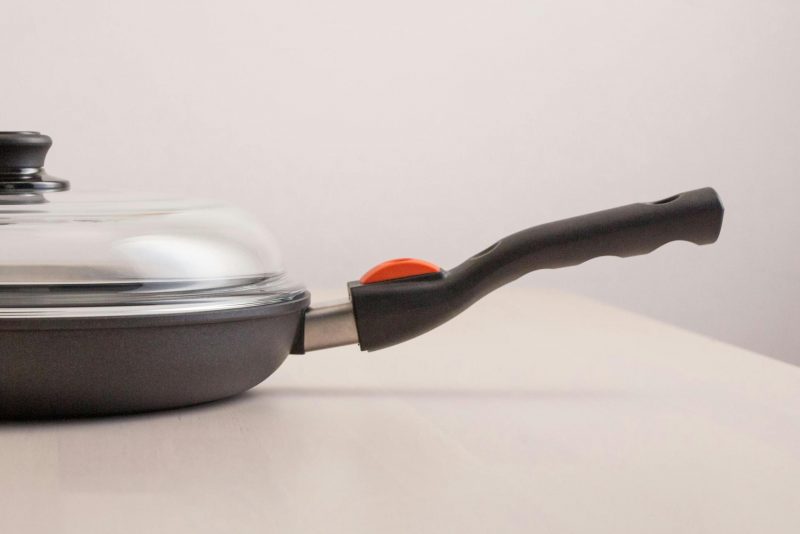
A research team at the University of Toronto's Faculty of Engineering has developed a new nonstick coating that matches the performance of conventional PFAS-based coatings while drastically reducing PFAS content, offering a safer and more environmentally friendly alternative. This breakthrough could help mitigate the long-term environmental and health risks associated with PFAS.
PFAS (per- and polyfluoroalkyl substances) are known for their exceptional water- and oil-repellent properties due to the stability of their carbon–fluorine bonds. However, they are highly persistent, earning the nickname "forever chemicals". PFAS can accumulate in the environment and within living organisms, biomagnifying through the food chain, and have been linked to cancer, birth defects, and other health concerns. While the use of some long-chain PFAS has been restricted, their lack of viable substitutes has sustained their widespread application in cookware, water-repellent fabrics, food packaging, and even cosmetics.
The Toronto team's coating is based on polydimethylsiloxane (PDMS, commonly known as silicone). Using an innovative "nano-arrowhead" technique, researchers grafted the shortest possible PFAS unit—containing only one carbon atom and three fluorine atoms—onto the ends of PDMS molecular chains. This nano-scale arrowhead-like arrangement combines the biocompatibility of PDMS with the nonstick performance of PFAS. Tests showed the coating achieved an oil repellency rating of level 6, equivalent to commercial PFAS coatings, but the ultra-short PFAS chains are unlikely to bioaccumulate.
The findings, published in Nature Communications, highlight a promising path toward safer nonstick materials, with ongoing research aimed at developing completely PFAS-free alternatives.
Toronto Researchers Develop Low-PFAS Nonstick Coating with Comparable Performance
Tags
Breakthrough in Optical Control of Ferroaxial Materials Paves Way for Next-Generation Data Storage
In today's digital world, information storage relies on binary code, where any physical system with two stable states can serve as a data carrier. Ferroic materials—such as ferromagnetic and ferroelectric…

A team of researchers at the University of Tokyo has discovered a new way to make nanodiamonds using electron beams. This method can turn a special molecule called adamantane into…
A rare mineral found in meteorites and on Mars has drawn scientific interest for its unusual thermal behavior. Unlike typical materials, this substance maintains nearly constant thermal conductivity across temperature…

Researchers at North Carolina State University have developed a new "self-driving laboratory" technology that leverages dynamic flow chemistry and real-time monitoring to boost the efficiency of materials discovery by at…
Breakthrough Silicon-Based Polymer Exhibits Semiconductor Properties, Paving Way for Flexible Electronics
A research team from the University of Michigan has made a groundbreaking discovery: a novel silicon-based material that exhibits semiconductor properties—an unprecedented feat for this class of compounds. The findings…