A new report by the International Energy Agency (IEA) warns that, in order to achieve global climate targets and ensure energy security, it will be necessary to add or replace approximately 49.7 million miles of transmission lines by 2040. This figure is roughly equivalent to the total length of the existing global power grids.
According to the IEA, this massive expansion of transmission lines will require more than $600 billion of annual investment in power grids by 2030, which is twice the current level. Additionally, it will necessitate changes in the operational and regulatory frameworks of power grids in each country.
The IEA highlights that although there has been impressive progress in clean energy technologies such as wind, solar, electric vehicles, and heat pumps, the lack of investment in transmission lines will ultimately create a bottleneck. Fatih Birol, the Executive Director of the IEA, stated in a written statement accompanying the report that many countries are making unprecedented progress on clean energy, but the failure of governments and businesses to collaborate on preparing global power grids for the emerging new energy economy may endanger these advances.
The report underscores the risks posed by the insufficient investment in transmission lines and emphasizes the necessary actions that need to be taken. Birol added that the report shows the risks and the actions that need to be taken and emphasizes the need to invest in power grids today to avoid stagnation in the future.
Currently, there are 1,500 gigawatts of renewable clean energy projects in the "advanced development stage" waiting to be connected to the global power grids, according to the IEA. This amount is five times the global wind and solar capacity added in 2022. To put this into perspective, a medium-sized city requires 1 gigawatt of electricity, as highlighted by Bill Gates, a climate investor and co-founder of Microsoft, in his book How to Avoid a Climate Disaster.
The IEA points out that these 1,500 gigawatts of renewable clean energy projects waiting to be connected to the power grids indicate the growing demand for electricity as various sectors of the global economy transition to electrification.
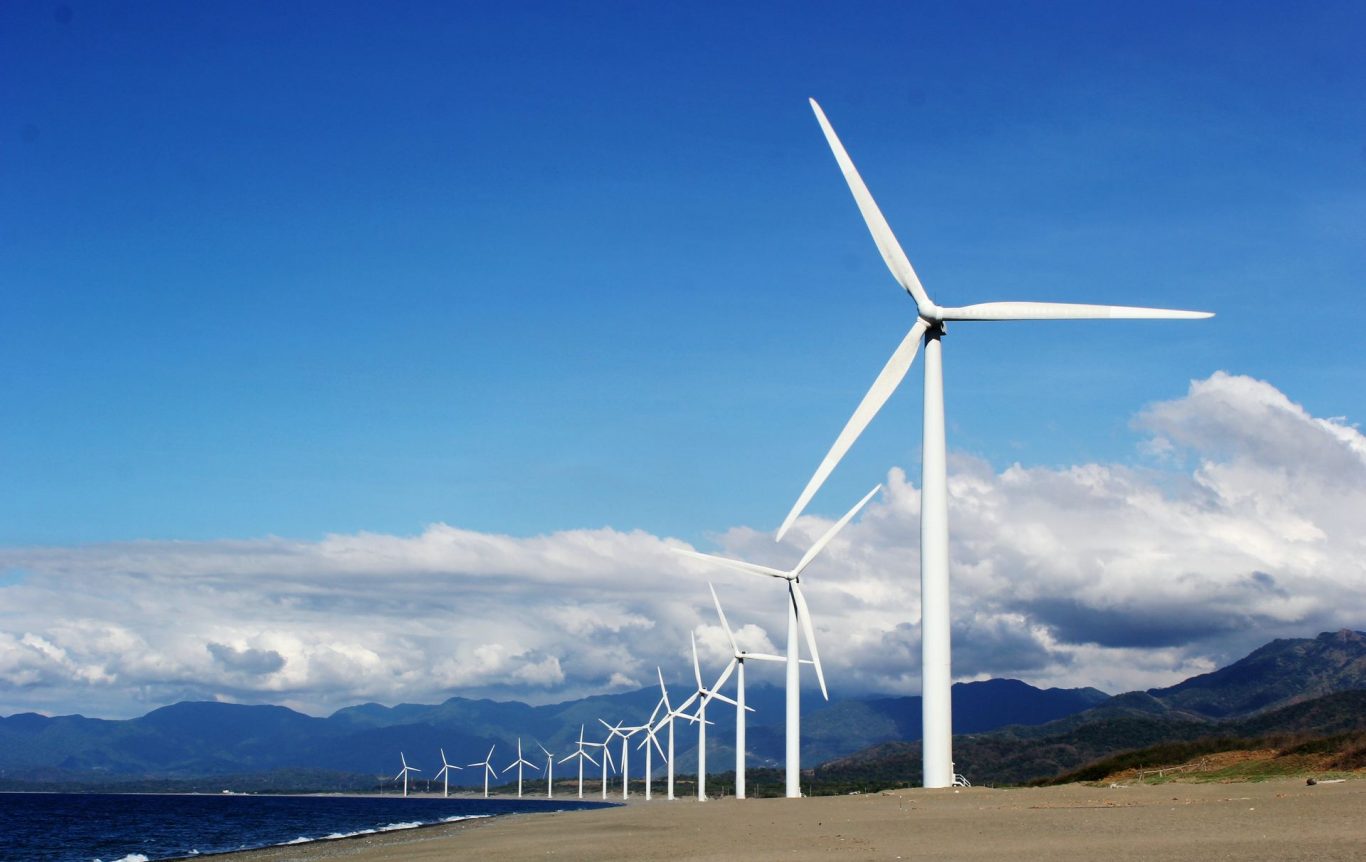 Image Credit: Kervin Edward Lara
Originally designed to deliver electricity from fossil fuel plants, power grids now need to adapt in order to transport electricity from wind and solar farms to where it is consumed, as the world strives to transition to a clean energy economy.
The IEA warns that further delays in building transmission lines will have serious consequences. In a scenario referred to as the "grid lag scenario," where power grid growth is slow, an additional 60 billion tons of carbon dioxide will be emitted between 2030 and 2050, equivalent to the total emissions from the global power sector in the past four years. This would result in the global average temperature being "far above" 1.5 degrees Celsius above pre-industrial levels by 2050, with a 40% probability of exceeding 2 degrees Celsius.
One of the challenges is that building transmission lines takes longer compared to other parts of the energy infrastructure.
The IEA explains that constructing new transmission lines typically takes 5 to 15 years, including the planning and permitting processes. In contrast, new renewable energy projects take 1 to 5 years, and new infrastructure for charging electric vehicles takes less than 2 years. Therefore, immediate investment in improving and expanding transmission line infrastructure is crucial to avoid it becoming an increasingly significant hindrance to global decarbonization plans.
The IEA stresses that building global transmission lines requires international cooperation. In a written statement, Birol stated that ensuring developing countries have access to the resources they need to build and upgrade their power grids is an important task for the international community.
Global Transmission Line Expansion Urgently Needed for Clean Energy Transition
Tags
The Sahara Desert, one of the driest places on Earth with an average annual rainfall of just about three inches, may experience a striking transformation later this century. A new study…

A new study led by the University of Exeter warns that the world has crossed its first recognized climate "tipping point", as coral reef ecosystems enter a state of widespread…

When earthquakes strike, the ground shaking people feel accounts for only a small fraction of the total energy released. Researchers at the Massachusetts Institute of Technology (MIT) have now shown…

A new study led by the University of Reading challenges long-held assumptions about primate origins. For decades, scientists believed primates, including humans, emerged from warm, humid tropical forests. However, reanalysis…

A research team from The Hong Kong Polytechnic University has, for the first time, used Satellite Laser Ranging (SLR) technology to generate precise global records of ocean mass changes spanning…

A groundbreaking study published in Nature Materials suggests that the combination of salt, ice, and mechanical strain could become a key to future renewable energy. Researchers have demonstrated that specially…