In the second quarter of 2023, global PC shipments experienced a significant decline of 13.4% compared to the previous year, according to IDC statistics. As a result, the monitor market also suffered adversely. IDC data further reveals that global PC monitor shipments decreased by 17.1% year-on-year to 29.9 million units in the same period. It is projected that shipments for the entire year of 2023 will decline by 10.3%.
Multiple factors contribute to this decline. Firstly, the monitor market is closely tied to the PC market, and as the demand for new PCs decreases, there is a corresponding decrease in demand for displays. Additionally, the rising popularity and improved performance of mobile devices like smartphones and tablets have prompted users to increasingly rely on these devices for their daily work and entertainment activities. This trend further impacts the demand for traditional PCs and monitors. Furthermore, the global display industry is facing challenges due to pressures on the global supply chain, including international trade tensions in 2023. Shortages of key components required for display production have resulted in reduced display shipments.
Regarding segmented panels, IDC’s latest report states that shipments of IPS screens, which are commonly used by consumers, experienced a year-on-year decline of 6.4% in the second quarter of 2023. Moreover, the average sales unit price of IPS screen monitors decreased by 17.7% to $164 compared to the previous year. On the other hand, VA screen shipments witnessed a substantial increase of 26.8% year-on-year, but their average sales unit price also saw a significant drop of 30% to $124.
Amidst the challenges faced by other panels, OLED panels are quietly making progress. According to data from a professional OLED panel analysis organization, the shipment volume of OLED display panels is expected to grow from 200,000 pieces in 2022 to 850,000 pieces in 2023, marking a remarkable year-on-year increase of 426%. This unprecedented growth signifies the immense potential and attractiveness of the OLED display market.
 Image Credit: IDC/Worldwide PC Monitor Forecast, 2023Q2
OLED display panels possess a range of high-end features, including high contrast ratio, superior high dynamic range (HDR) performance, quick response time, wide viewing angles, and ultra-thin profiles. With the increasing supply, improved production capacity allocation, and optimization of panel cost structure and manufacturing technology, the shipments of OLED display panels are projected to experience rapid growth. This growth will be particularly notable in markets such as high-end professional gaming, content creation, and multimedia professional displays.
Currently, OLED display panels are primarily manufactured by two companies, Samsung and LG. Samsung focuses on producing medium and large-sized high-end OLED panels, utilizing Mixed Mode Driving (MMG) technology to manufacture displays of various specifications, including 34-inch and 49-inch panels, on the same production line. On the other hand, LG specializes in small-size OLED panels, offering two popular specifications of 27 inches and 45 inches. With continuous technological advancements and large-scale production, the cost of LG OLED panels is gradually decreasing. This allows terminal manufacturers to acquire OLED panels at more favorable prices and introduce consumer-friendly OLED display products. The significant drop in prices of OLED display terminal products has significantly increased consumers’ willingness to purchase and accept OLED displays.
Looking ahead, Samsung Display plans to expand its QD-OLED display lineup from the current two models to four by the end of 2023. This expansion will include the addition of new specifications such as 27 inches and 31.5 inches, catering to the needs of a wider consumer base. LG also intends to introduce 32-inch and 39-inch models to its 8.5-generation WOLED production line. Both new products will exhibit excellent display performance, including ultra-high refresh rates. The continual enrichment of product offerings by these two major OLED panel manufacturers will drive the widespread adoption of OLED displays.
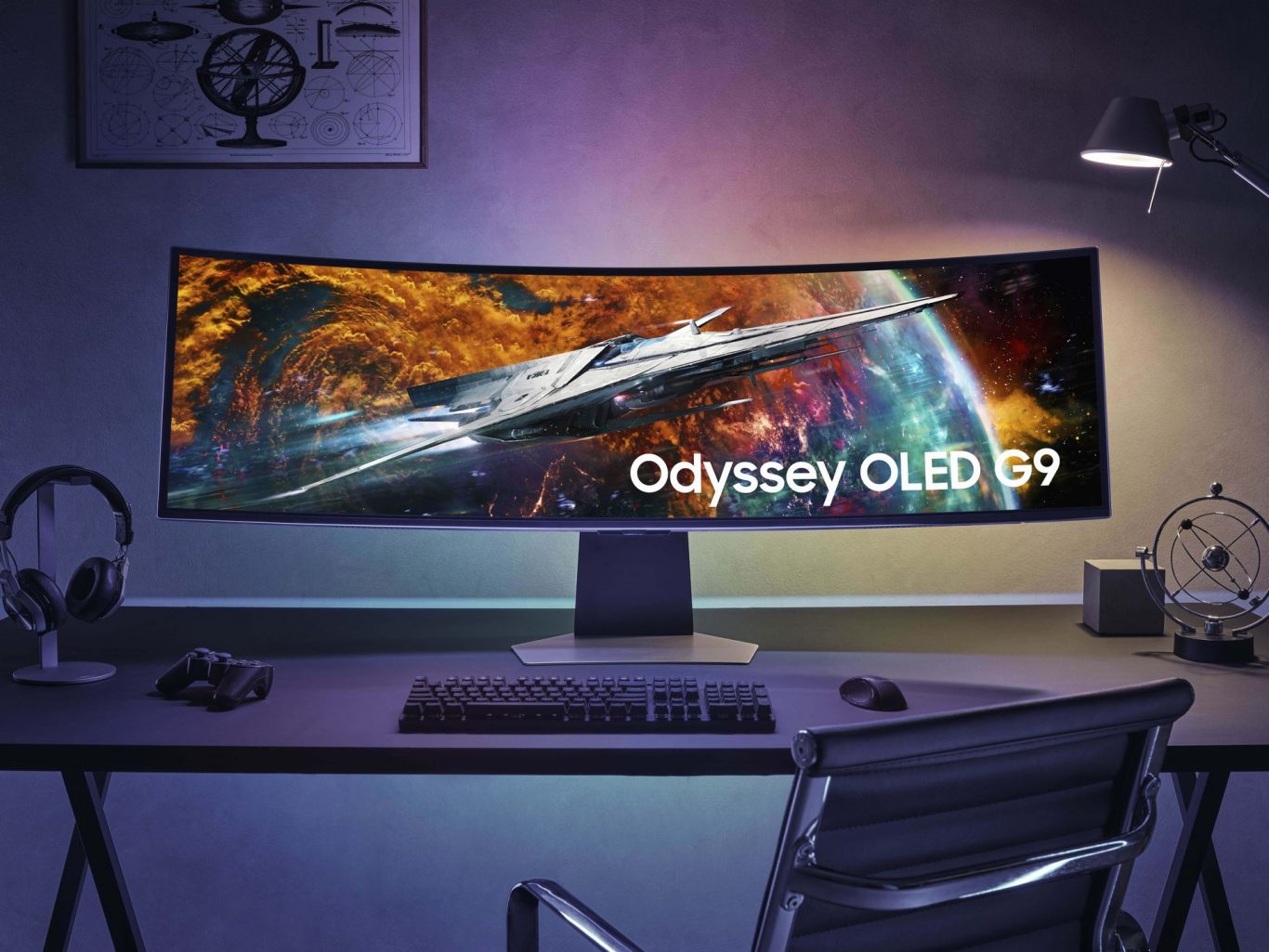 Image Credit: Samsung Odyssey OLED G9
As the global display market transitions from an incremental market to a stock market, many companies are actively seeking new growth drivers. In this process, OLED displays are viewed as a potential catalyst for market growth, thanks to their unique high-end characteristics. However, this transformation journey is not without challenges.
Material Challenges
The production of OLED displays relies on various raw materials, including organic light-emitting materials, conductive materials, and substrate materials. Among these, organic light-emitting materials are the most intricate and expensive components.
The manufacturing process for organic light-emitting materials involves intricate chemical synthesis, performed under strict control conditions. Then, a complex purification process is employed to extract the organic light-emitting materials for display use. This process demands high technical expertise and results in relatively higher production costs compared to the manufacturing of liquid crystal materials for traditional LCD panels.
Technical Challenges
In the production process of OLED panels, organic materials are sandwiched between two layers of conductive materials. These organic layers emit light when stimulated by current. Achieving this requires precise engineering and takes place in a near-vacuum environment to prevent oxidation of the organic materials. These stringent requirements place significant demands on the production line, which is why the majority of large-size OLED panel production is concentrated in established panel factories.
As each pixel of OLED screens emits light independently, a complex integrated circuit (IC) driver is necessary to control the brightness of individual pixels. The design and manufacturing of this driver circuit pose additional technical challenges.
Furthermore, the high-cost raw materials and complex manufacturing processes have limited the affordability of OLED panels. Additionally, OLED panels themselves have inherent technical limitations, such as screen burn-in and lower brightness levels compared to other types of display technologies.
Screen burn-in is a phenomenon where OLED pixels age over time, particularly blue pixels, which have a shorter lifespan due to lower luminous efficiency and the requirement for higher current to drive them. Although OLED manufacturers claim to have protection technology to prevent burn-in, there have been cases of OLED mobile phones experiencing this issue in recent years. While efforts are being made, a permanent and foolproof solution to screen burn-in has yet to be achieved.
Furthermore, due to factors such as screen size and technology, OLED panel displays generally have a lower peak brightness of around 250 nits compared to traditional IPS panels, which typically reach around 350 nits. This 100-nit gap can result in compromised display performance under strong lighting conditions for OLED screens.
In the current display technology market, consumers have a wide range of choices. Mature MiniLED panels, cost-effective high-resolution and high-refresh rate IPS panels, and gradually maturing MicroLED technology all provide alternatives to OLED. Both MiniLED and MicroLED can offer high contrast and full-color displays similar to OLED, while avoiding the issue of pixel aging. High-refresh-rate IPS panels also compete strongly with OLED in terms of gaming performance and cost.
Although OLED panels have gained momentum and a foothold in the display panel segment, overcoming key challenges and finding a suitable development direction is necessary to maintain a leading position in the market. OLED will require more time to become universally popular and establish a competitive advantage over other panel technologies. For instance, OLED needs to maintain its dominance in the large-screen display market and develop more inclusive and cost-effective panels to meet the demands of the mass market.
From a consumer perspective, competition among these technologies drives continuous innovation and performance improvements, making products more affordable. It allows us to choose the most suitable product based upon our needs and budget, providing a high-quality display experience at a lower cost. This is undoubtedly a positive outcome and a blessing brought by technological progress.
Challenges and Potential of OLED Display Panels: A Path Towards Advancement and Market Competition

Tags
During summer break, teens often turn to social media and video games to cope with boredom. While parents have long focused on balancing screen time with outdoor activities, a new…

The Impact of Smartphones and Social Media on Teen Mental Health: A Controversial Debate
In recent years, adolescent mental health issues have become increasingly severe, with many blaming the widespread use of smartphones and social media. Critics argue that excessive screen time encroaches on…

A new study led by Curtin University in Australia has uncovered a breakthrough in enhancing the adhesion of more molecules to the surface of tiny nanocrystals, with the potential to…

Recent reports indicate that the release of the Apple iPad Pro 2024 has been delayed until May due to a shortage of OLED panels. The iPad Pro 2024 comes in both…

LG Display recently made an announcement stating that Starbucks' new store features the installation of transparent OLEDs. The store, located in the Yeosu Dosan DT area of South Korea, boasts…