Ultraviolet (UV) light is characterized by a shorter wavelength than visible light. The ability of people to see UV light depends on factors such as age and the presence of UV filtering capabilities in the lens of the eye.
The retina, located at the back of the eye, contains photoreceptors that detect light and transmit signals of various wavelengths to the brain via the optic nerve. These signals are then interpreted as different colors. Within the human eye, there are three types of cone cells that are sensitive to the primary colors of light: red, green, and blue. Interestingly, blue cones have some capacity to detect certain UV light wavelengths.
The lens, a transparent and curved structure in the eye, plays a crucial role in focusing light onto the retina, enabling clear vision. UV rays possess higher energy than visible light and can potentially accelerate the aging of eye structures and increase the risk of cancer. Fortunately, the lens typically filters out UV light, preventing high-energy wavelengths from reaching the cones. This natural filtering mechanism shields most individuals from potential eye damage caused by UV rays.
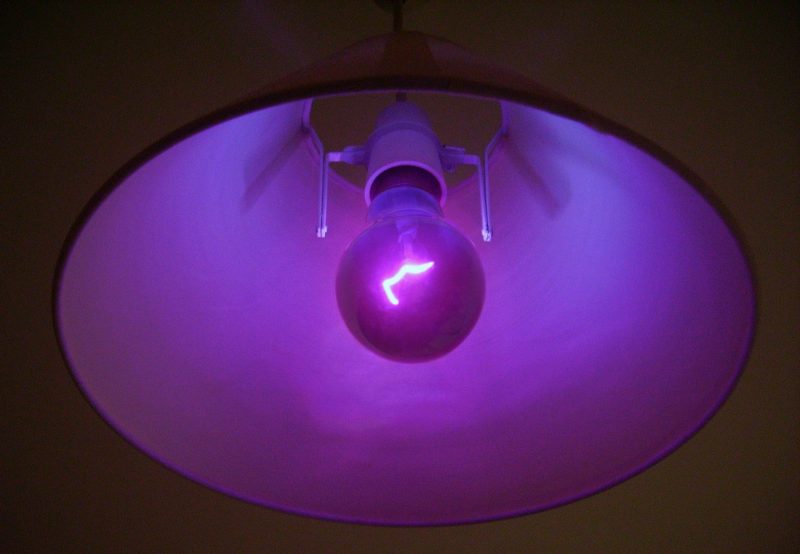
In general, young individuals can still perceive some UV light. A small study conducted at the University of Georgia in the United States found that all participants were able to see UV light around the 315 nanometer range. During the experiment, participants reported perceiving a light that appeared as an unsaturated purple-blue color. However, this ability seems to diminish with age, suggesting that the capacity to perceive UV light declines as individuals grow older.
Certain individuals possess the ability to perceive a broader range of the UV spectrum. For instance, some cataract patients require lens removal surgery, and after the procedure, they become capable of perceiving UV light. Additionally, individuals who are born without a lens can also perceive UV rays, which appear as light blue or lavender in color. A notable example is the Impressionist painter Claude Monet, who underwent cataract surgery in 1923. Following the surgery, Monet began perceiving water lilies with enhanced blues and purples, which were subsequently reflected in his paintings.
According to a 2003 study published in the Proceedings of the National Academy of Sciences, the ancestors of vertebrates possessed the ability to perceive UV light, with specialized photoreceptors dedicated to this wavelength. However, during the course of human evolution, these photoreceptors became more inclined to detect violet light rather than UV light. This evolutionary adaptation may have arisen as a protective measure for vision.
Tags
A new type of hollow-core optical fiber could dramatically enhance both data capacity and transmission distance in a single strand, paving the way for faster and more efficient telecommunications networks.…
Why do bats frequently collide with wind turbines? A new scientific study points to visual misperception as a key factor. While the impact of turbines on birds has long been…

A new study published in Science reveals that artificial night lighting significantly prolongs daily birdsong, marking the first global-scale validation of this phenomenon. Researchers from Oklahoma State University and Southern Illinois…

Scientists have captured the most detailed image yet of the universe just 380,000 years after the Big Bang, using the Atacama Cosmology Telescope (ACT). This groundbreaking observation reveals the motion…

Circularly polarized light, either left-handed or right-handed, is an electromagnetic wave that rotates clockwise or counterclockwise during propagation. It plays a vital role in medical imaging and advanced communication technologies.…