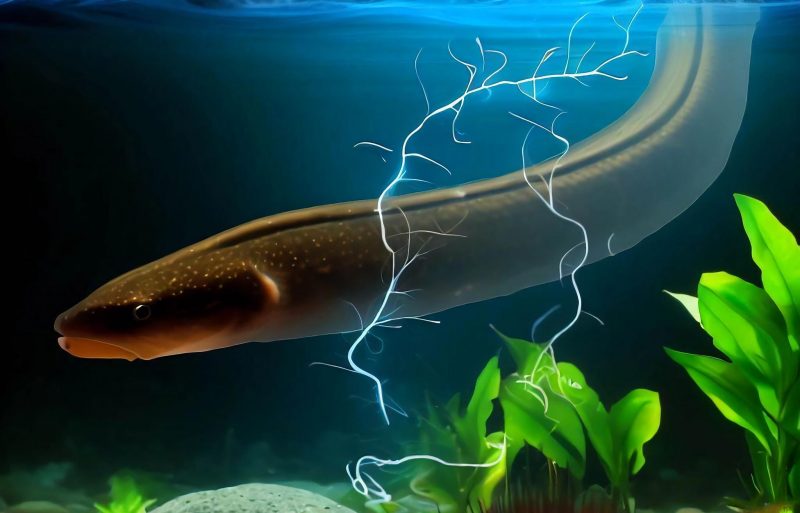
Electric eels have two main uses for their electrical discharges: defense and hunting. They also use weak electric currents to communicate and search for prey. Among the known species of electric eel, the maximum voltage they can release is 860 volts.
The electrical current from an electric eel is capable of stunning or even killing many animals, including large ones. In 1807, Alexander von Humboldt drove around 30 horses and mules into a pool filled with electric eels, and two horses died within 5 minutes.
Now, here comes the question: can an electric eel electrocute itself with its own electricity?
In reality, whether an electric eel discharges its own electricity or is discharged by another electric eel, the current always flow through the water next to the electric eel. Therefore, it does not make any difference who discharges the electricity. Over time, the surface of the electric eel has developed an insulating layer that can resist the current in the water. Hence, under normal circumstances, electric eels will not be electrocuted by their own electricity.
However, there are some exceptions. If an electric eel is injured or a very young electric eel confronts an adult high-voltage electric eel, the former is in danger of being injured or even killed. In these situations, an electric eel can still be threatened by its own electricity.
Can Electric Eels Electrocute Themselves with Their Own Electricity?
Tags
A groundbreaking study published in Nature Materials suggests that the combination of salt, ice, and mechanical strain could become a key to future renewable energy. Researchers have demonstrated that specially…

When two materials come into contact, surface charge transfer can occur—like the static electricity generated when a balloon is rubbed against skin. Similarly, water flowing across certain surfaces can gain…

Global Data Center Power Demand to More Than Double by 2030, Driven by AI Surge, IEA Warns
According to the latest report by the International Energy Agency (IEA), global electricity consumption by data centers is projected to more than double by 2030, reaching 945 terawatt-hours (TWh)—nearly equivalent…

A provocative new theory has sparked interest and debate in the scientific community: Earth's rotation within its geomagnetic field might be harnessed to generate electricity. Although the idea remains contentious,…

Researchers have developed a groundbreaking technology that enables the printing of metal oxide films at room temperature, allowing for the creation of transparent, highly conductive circuits capable of withstanding extreme…

A new report by the International Energy Agency (IEA) highlights the critical need for adding or replacing approximately 49.7 million miles of transmission lines worldwide by 2040 to achieve climate targets and ensure energy security. The report emphasizes the lack of investment in transmission lines as a potential bottleneck that could hinder the progress of clean energy technologies. Urgent actions and international cooperation are required to address this challenge and avoid potential stagnation in the future.