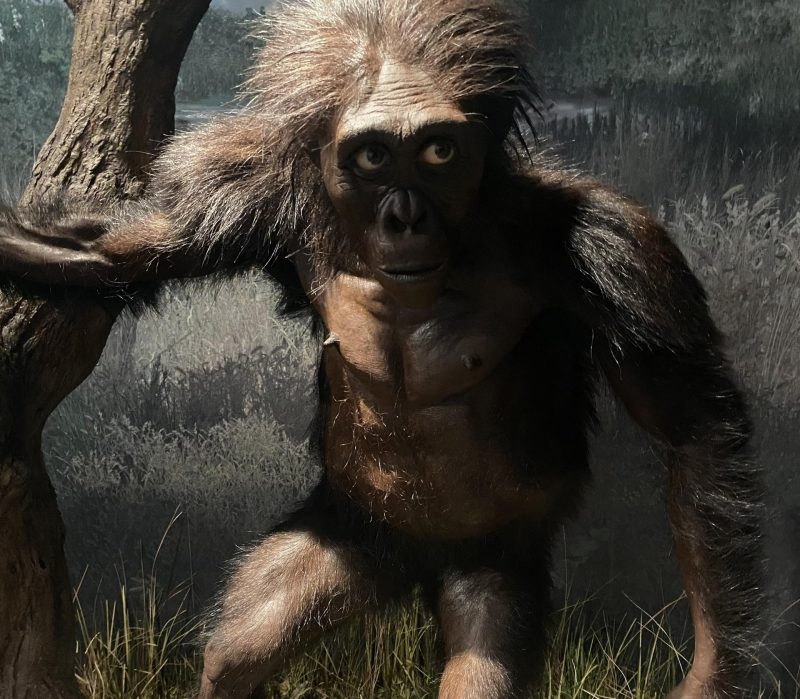
A new study from researchers at Duke University in the United States has shed light on the running abilities of Australopithecus afarensis, a small ancient human relative who lived over 3 million years ago. Through 3D computer simulations, the researchers discovered that this early human ancestor, despite walking on two legs like modern humans, exhibited significant differences in speed and endurance.
The simulation provided detailed insights into the running speed and muscle adaptation characteristics of these ancient humans, which are crucial for modern humans' long-distance running capabilities. The findings of the study have been published in the latest issue of the journal Current Biology.
Using advanced technology, the researchers created a 3D digital model of the skeleton of "Lucy", an almost complete specimen of Australopithecus afarensis discovered in Ethiopia nearly half a century ago, dating back approximately 3.2 million years. By combining muscle features of modern apes with the surface area of Lucy's bones, they estimated the muscle mass of the ancient humans. They then simulated "Lucy running" and compared her performance to a digital model of a modern human.
The results revealed that Lucy had the ability to run on two legs but lacked the elongated Achilles tendon and shortened muscle fibers necessary for endurance running in modern humans. Even with the reshaped model using human muscles, her maximum speed was only 5 meters per second, while the modern human model could reach 8 meters per second. Even when adjusting for body size differences, Lucy's speed still fell short, indicating that her body proportions were a significant limiting factor.
Further simulations highlighted the critical role of ankle muscles. When the researchers added human-like ankle muscles to the Lucy model, her energy consumption was comparable to animals of similar size; however, using ape-like ankle muscles made running more strenuous. This suggests that the adaptation of the Achilles tendon and surrounding muscles in modern humans provides a significant advantage for long-distance running.
3D Simulations Reveal Ancient Humans' Limited Running Speed and Endurance
Tags
Archaeologists have uncovered stone tools at the Little Paxton site, about 80 kilometers east of London, dating back roughly 440,000 years. Using advanced infrared radiofluorescence dating, researchers confirmed the artifacts…

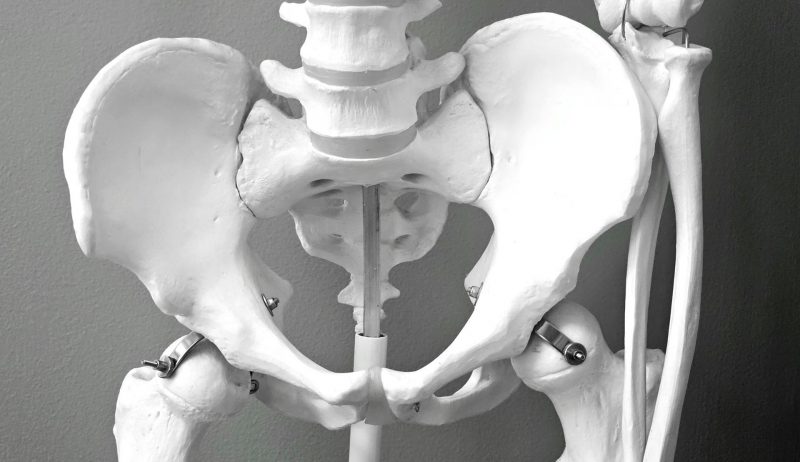
Although all vertebrates possess a pelvis, only humans have evolved a structure optimized for efficient, long-distance bipedal locomotion. This evolutionary transformation took over five million years, yet the precise developmental…
Over 10 million years ago, ancient African apes gained extra nutrition by eating fallen, fermented fruit—a behavior that may have laid the evolutionary foundation for humans' alcohol tolerance. A recent…

Although the emotions and thoughts of past generations left no direct trace, cultural artifacts such as paintings, literature, and music serve as “cognitive fossils” that offer insight into historical psychology.…

Humans have an innate ability to perceive possible actions in their environment—knowing, for instance, that a path can be walked on or that a lake can be swum in. Despite…

A new genomic study published in Communications Biology suggests that bedbugs may have been the earliest urban pests to form a symbiotic relationship with humans—predating rats and cockroaches by several…