On January 12, the World Meteorological Organization issued a press release officially confirming that 2023 has become the hottest year on record, surpassing the previous record and exceeding the expectations of many climate scientists.
Unfortunately, the trend of warming may not be coming to a halt. As we move into 2024, the El Niño weather pattern is entering its second year, a phenomenon typically associated with increased global warming. In January, warm water poured into the eastern tropical Pacific, leading to significantly higher global ocean temperatures compared to the historical average for the same period. An article published on the British "Nature" website suggests that as long as humans continue to emit greenhouse gases into the atmosphere, we can expect more frequent and severe weather and climate events in 2024 compared to 2023.
Samantha Burgess, deputy director of the Copernicus Climate Change Service at the European Center for Medium-Range Weather Forecasts, has acknowledged that heatwaves will persist in 2024. However, it remains challenging to predict the exact timing and locations of these heatwaves.
The average annual temperature is poised to surpass critical thresholds. Multiple service agencies released data in early January indicating that the global average surface temperature in 2023 will be 1.34°C to 1.54°C higher than the pre-industrial level (1850-1900). The Copernicus Climate Change Service reports that last year, daily temperatures were consistently at least 1°C above the pre-industrial average, marking a historical milestone.
Although estimates vary due to different datasets used, all analyses concur that the global average annual temperature is approaching or has already exceeded the 1.5°C threshold set by the Paris Agreement. According to data from the Copernicus Climate Change Service, nearly half of the days in 2023 will experience temperatures more than 1.5°C above the pre-industrial average, with two days in November even surpassing 2°C.
The British National Meteorological Office conducted an analysis that suggests the temperature in 2023 will be 1.46°C higher than the pre-industrial average. Furthermore, the agency predicts that in 2024, the global average surface temperature is likely to surpass the 1.5°C mark. Climate scientist Nick Dunstone, leading the research, emphasizes that this prediction represents the first of its kind. Nevertheless, it is important to note that exceeding 1.5°C in a single year does not equate to a violation of the Paris Agreement. A formal determination of non-compliance requires sustained warming above the threshold for a decade or more.
The extreme climate and weather events experienced in 2023 serve as a stark reminder of how profoundly humans have altered the planet. Climate scientists assert that our current experiences are merely a glimpse of what awaits us if we fail to take immediate action.
Several climate data services have reached a consensus that 2023 witnessed numerous record-breaking events, including the hottest day on record (July 6), the hottest month on record (July), and the hottest months on record (June to December). When modern temperature records were combined with paleoclimate indicators, researchers found that 2023 could potentially be the hottest year in the past 100,000 years.
Samantha Burgess highlights multiple factors contributing to the extreme weather observed in 2023. Record-high carbon dioxide emissions from fossil fuels, reaching 36.8 billion tons, played a significant role. Additionally, the eruption of Tonga's volcano in 2022 injected heat-trapping water vapor into the atmosphere, exacerbating the situation.
El Niño is another contributing factor. Simulations suggest that the Earth is currently at or near the peak of an El Niño event. The heightened levels of heat in the world's oceans could potentially fuel marine heatwaves in the coming months.
However, researchers have yet to reach a consensus on whether the extreme temperatures observed in 2023 signify an acceleration of global warming or are partly attributed to fluctuations caused by natural changes in the global climate system.
Berkeley Earth, a non-profit research organization based in the United States, indicates that temperatures began to rise even before the onset of El Niño in June 2023, partially due to natural changes in the North Atlantic and other regions. The team predicts a 58% chance that this year will be warmer than the previous one, and they anticipate that 2024 will likely be the hottest or second-warmest year on record.
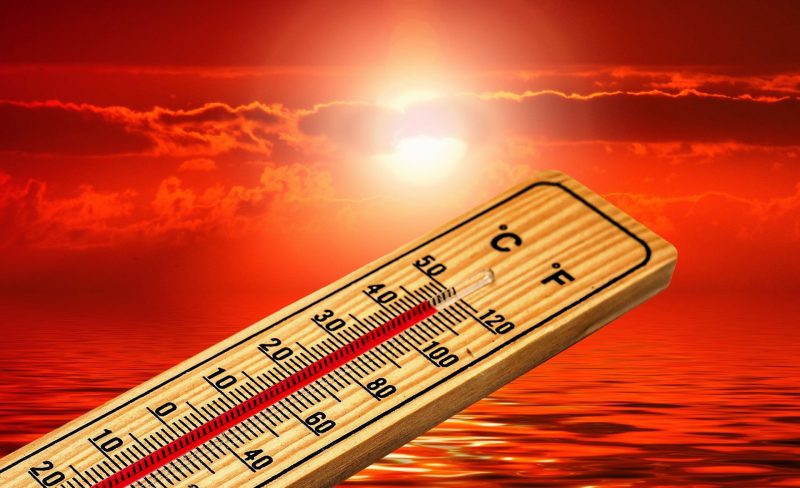
 Image Credit: Pixabay
The future scenarios of climate change are becoming increasingly apparent. In 2023, extreme weather events occurred with greater frequency. These included Category 5 Hurricane Otis, which devastated the Mexican city of Acapulco and resulted in numerous casualties. Smoke from wildfires in Quebec, Canada, in June and July spread to many cities in the Midwest and Northeast of the United States, and even traveled across the ocean, affecting parts of Europe. Greece experienced widespread fires in July and August, leading to the loss of numerous lives and extensive damage to forests. Additionally, strong winds and invasive weeds caused a wildfire on the Hawaiian island of Maui in August, claiming the lives of at least 100 people.
Heatwaves also ravaged various parts of the world. Phoenix, Arizona, witnessed temperatures of 43°C or above for 31 consecutive days. In Mexico, a July heatwave resulted in the deaths of over 200 people. East Africa, grappling with three years of severe drought and the effects of climate change, faced both a food crisis and a refugee crisis.
At the end of 2023, during the 28th Conference of the Parties to the United Nations Framework Convention on Climate Change in Dubai, global leaders made commitments to transition away from fossil fuels for the first time. However, many critics argued that these actions were "too little" in comparison to the immense impact of climate change and were perceived as coming "too late."
Tereza Cavazos, a climate scientist at the Center for Scientific Research and Higher Education in Ensenada, Mexico, emphasizes that humans do not need to wait another 15 or 20 years to witness the anticipated changes and impacts of climate change. The effects are already becoming evident.
2023: The Hottest Year on Record and a Harbinger of Climate Crisis
Tags
The Sahara Desert, one of the driest places on Earth with an average annual rainfall of just about three inches, may experience a striking transformation later this century. A new study…

A new study led by the University of Exeter warns that the world has crossed its first recognized climate "tipping point", as coral reef ecosystems enter a state of widespread…

A new study led by the University of Reading challenges long-held assumptions about primate origins. For decades, scientists believed primates, including humans, emerged from warm, humid tropical forests. However, reanalysis…

A research team from The Hong Kong Polytechnic University has, for the first time, used Satellite Laser Ranging (SLR) technology to generate precise global records of ocean mass changes spanning…

Prochlorococcus, the most abundant microbe in the oceans, is facing a survival crisis due to global warming. This single-celled cyanobacterium, found across more than 75% of the ocean's surface waters,…

A new study from the University of Hong Kong, published in Nature Climate Change, has found that long-term exposure to extreme heat can accelerate organ aging and increase multiple health…