A recent reanalysis of data from the Cassini mission by a team of US scientists has unveiled intriguing findings about Saturn's moon, Enceladus. The study, published in Nature Astronomy, sheds light on the composition of the gas plumes emanating from the moon.
Back in 2005, the Cassini spacecraft made an extraordinary discovery when it detected substantial plumes of material escaping into space from Enceladus's southern hemisphere. These plumes are thought to originate from underground oceans beneath cracks in the moon's icy surface. By examining data collected during two flybys in 2011 and 2012 using Cassini's Ion and Neutral Mass Spectrometer (INMS), researchers identified the presence of water, carbon dioxide, methane, ammonia, and molecular hydrogen in the samples.
Building upon this knowledge, Jonah Peter and his colleagues from Harvard University took a fresh look at the INMS data processed by the facility team. They employed statistical analysis techniques to explore billions of potential components of the plume material. Through this comprehensive analysis, the team identified five previously known molecules, along with newly discovered hydrocarbons, including hydrogen cyanide (HCN), acetylene (C2H2), propylene (C3H6), and ethane (C2H6). Additionally, traces of alcohols (methanol) and molecular oxygen were also detected.
This diverse reservoir of chemicals beneath Enceladus' surface has captured the attention of researchers, who speculate that it may harbor a habitable environment or even support microbial communities. However, it is crucial to note that the potential for these compounds to sustain life on Enceladus heavily relies on their concentration levels within the subsurface ocean.
The reanalysis of the Cassini mission data, as conducted by Jonah Peter and his team, offers valuable insights into the complex composition of Enceladus' plumes. This research further deepens our understanding of this intriguing moon and its potential for hosting life in the depths of its subsurface oceans.
Uncovering an Abundance of Organic Molecules in Enceladus' Enigmatic Plumes
Published on Dec 22, 2023
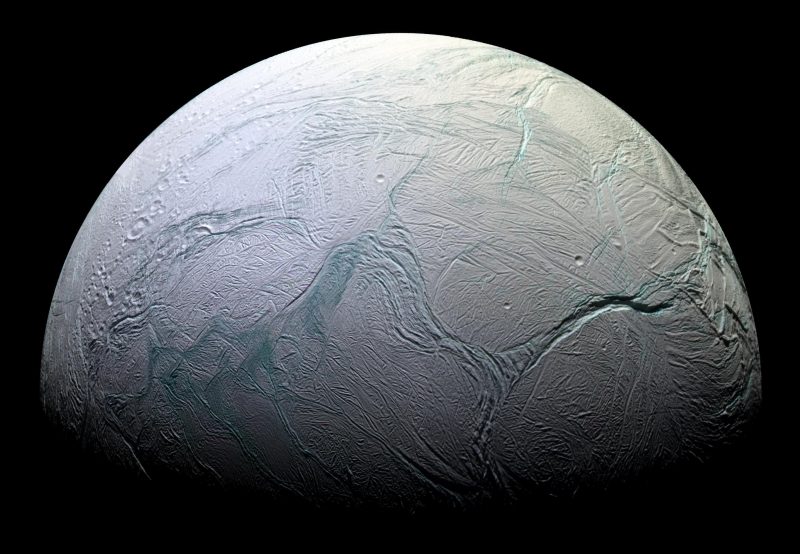
Image Credit: NASA/Enceladus
Tags
A new NASA study indicates that Saturn's largest moon, Titan, may host naturally forming primitive cell-like structures called vesicles within its liquid hydrocarbon lakes. The finding offers fresh insight into…
New research published in Nature on February 7 reveals intriguing findings about Saturn's moon Mimas, suggesting the presence of a vast global ocean beneath its icy exterior. These findings have…