On December 28, Toyota Motor made an announcement regarding the establishment of the "Automotive Advanced SoC Research Center" (ASRA) by 12 prominent Japanese companies. This collaboration includes automobile manufacturers, electrical component manufacturers, and semiconductor companies, all joining forces to conduct joint research and development on high-performance semiconductors for automotive Systems-on-Chip (SoCs).
Toyota stated that modern vehicles utilize approximately 1,000 semiconductors, with different types being employed for various applications. Among them, SoCs are crucial semiconductors necessary for autonomous driving technology and multimedia systems in automobiles. These SoCs demand cutting-edge semiconductor technology to achieve advanced computing capabilities.
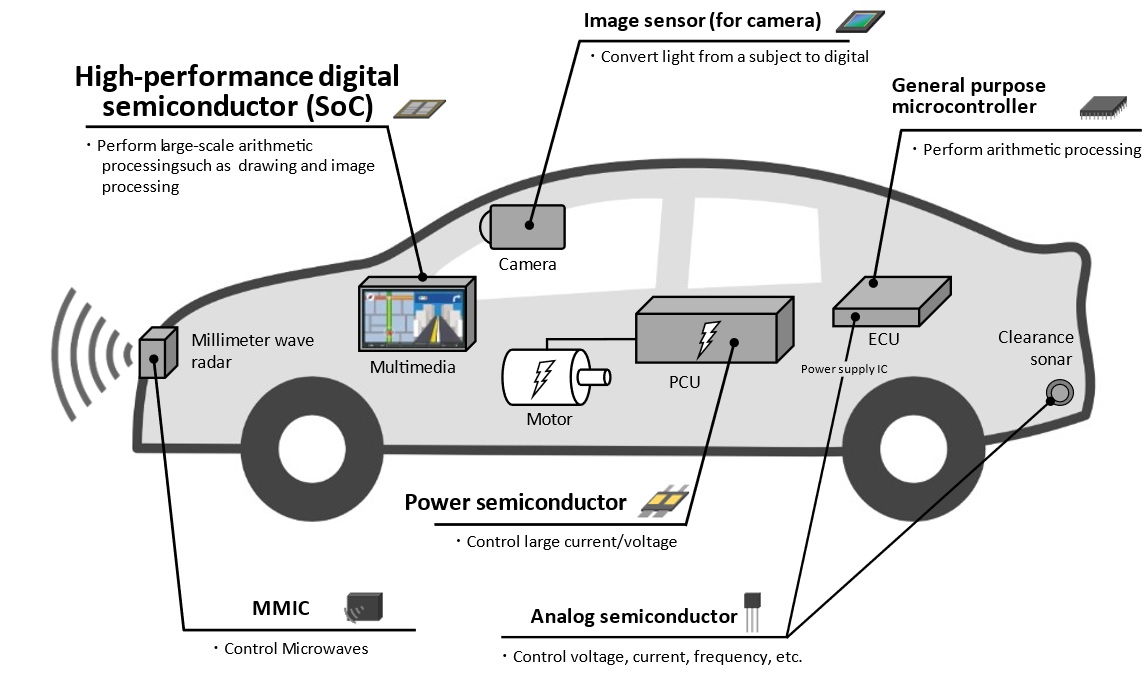 Image Credit: Nissan/ASRA News
ASRA's primary focus will be on meeting the stringent safety and reliability requirements for automobiles, with car manufacturers playing a central role in the research. By leveraging the technical expertise and experience of electrical component and semiconductor companies, ASRA aims to drive the practical implementation of state-of-the-art technologies. Specifically, ASRA intends to develop automotive SoCs using chiplet technology, which involves combining different types of semiconductors.
The companies participating in ASRA include Toyota, Subaru, Nissan, Honda, Mazda, Denso, Panasonic Automotive Systems, Socionext, Renesas Electronics, Synopsys Japan, Mirise Technologies, the semiconductor joint venture between Toyota and Denso, and Cadence Design Systems Japan.
ASRA has set ambitious goals, aiming to establish in-vehicle chiplet technology by 2028 and begin installing SoCs in production cars starting in 2030.
Toyota Joins Forces with 11 Other Japanese Companies to Develop High-Performance Automotive Chips
Tags
MIT's Breakthrough Integrates GaN Transistors into Silicon Chips for Low-Cost, High-Performance Electronics
Gallium nitride (GaN), the world's second most widely used semiconductor after silicon, offers unique advantages for applications in lighting, radar systems, and power electronics. However, its high cost and complex…

Researchers at Carnegie Mellon University have developed “Zippy”, the world's smallest self-powered bipedal robot. Standing just 1.5 inches tall, Zippy can walk at over 0.5 miles per hour and is…

The University of Hong Kong (HKU) has surpassed Peking University (PKU) in the latest QS World University Rankings, becoming the highest-ranked Chinese institution and marking a significant achievement for the…

Breakthrough Silicon-Based Polymer Exhibits Semiconductor Properties, Paving Way for Flexible Electronics
A research team from the University of Michigan has made a groundbreaking discovery: a novel silicon-based material that exhibits semiconductor properties—an unprecedented feat for this class of compounds. The findings…

Over 80 exhibitors are showcasing more than 1,000 products — including Japanese sake, plum wine, and beer — at the ongoing Japan Sake Month, the largest Japanese sake trade fair…

China will expand its visa waiver policy to include six additional countries starting June 1, aiming to further stimulate inbound tourism. Under a reciprocal agreement with Uzbekistan, citizens of both countries…