A research team from the University of California, Riverside, has published a groundbreaking study in Physical Review Letters, demonstrating a major advancement in optical technology that could substantially improve the performance of gravitational wave detectors like LIGO (Laser Interferometer Gravitational-Wave Observatory).
Since the first detection of gravitational waves in 2015, LIGO has revolutionized our understanding of the universe. However, detecting signals from the early universe—such as those preceding the formation of the first stars—requires increasing laser power beyond 1 megawatt, far exceeding LIGO's current capacity.
To address this challenge, the research team has developed a novel low-noise, high-resolution adaptive optics system capable of correcting thermal distortions in LIGO's mirrors caused by increased laser power. This breakthrough not only enhances the sensitivity of gravitational wave detectors but also lays the foundation for the next generation of observatories.
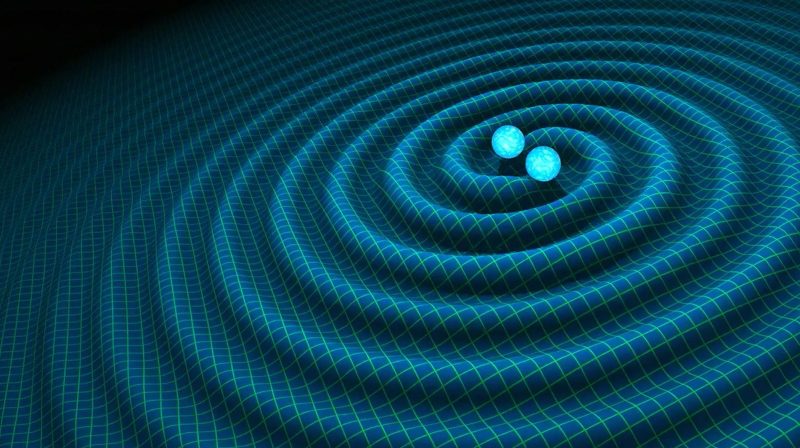
Gravitational waves, ripples in spacetime caused by massive cosmic events such as black hole or neutron star mergers, provide an unprecedented opportunity to study extreme astrophysical phenomena. LIGO, consisting of two 4-kilometer-long laser interferometers in Washington and Louisiana, has detected approximately 200 mergers of stellar-mass compact objects to date.
Looking ahead, scientists plan to build the next-generation gravitational wave observatory, Cosmic Explorer, which will be ten times larger than LIGO. This advancement will further expand humanity's ability to explore space, potentially allowing us to detect signals from the earliest epochs of the universe—tracing back to just 0.1% of the time after the Big Bang.
Optical Technology Could Significantly Enhance LIGO’s Gravitational Wave Detection
Tags
LIGO Detects Record-Breaking Black Hole Merger, Confirming Einstein and Hawking Predictions
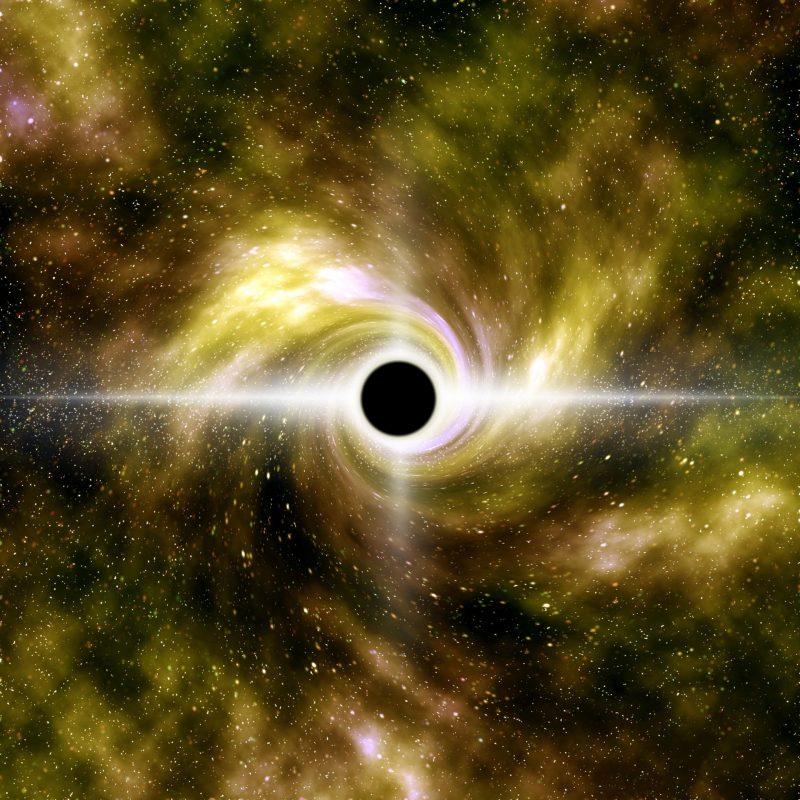
Astronomers have detected the strongest gravitational wave signal ever recorded, produced by the collision of two black holes, using the U.S.-based Laser Interferometer Gravitational-Wave Observatory (LIGO). The breakthrough provides the…
For the first time, scientists have developed a micro-laser made entirely from edible materials—a breakthrough that could lead to ingestible sensors capable of monitoring the properties of food and pharmaceuticals.…

Metal laser processing is widely used in sectors such as automotive, aerospace, and healthcare for tasks like precision welding and metal 3D printing, thanks to its high accuracy and flexibility.…
An international team of scientists led by the University of Freiburg's Institute of Physics has successfully generated and directly controlled a hybrid electron-photon quantum state in helium atoms. This groundbreaking…

A recent discovery published in Science Bulletin proposes an innovative method for detecting gravitational waves using Mössbauer resonance. Similar to the sensitivity of a frog's eye to motion, this novel…