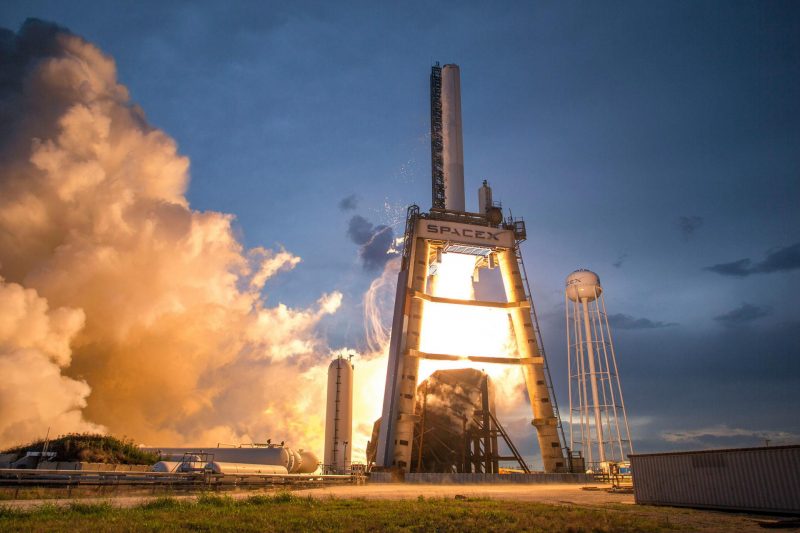
A chemistry team at the University at Albany has successfully synthesized manganese diboride (MnB₂), a high-energy compound that could serve as a next-generation rocket fuel, significantly improving the efficiency of space travel.
According to the researchers, MnB₂ offers an energy density more than 20% higher by weight and about 150% higher by volume compared with aluminum, the material widely used in current solid rocket boosters. This advance means future rockets could require far less fuel for the same missions, freeing up space for scientific instruments and samples. The compound is stable under normal conditions and ignites only when in contact with a fuel source such as kerosene.
The synthesis of MnB₂ had long been a major challenge. Using advanced arc-melting technology, the team compressed manganese and boron powders into pellets, then exposed them to nearly 3,000°C in a custom chamber, followed by rapid cooling to preserve the compound's unique molecular structure. Computational models revealed that its extraordinary energy storage comes from subtle structural asymmetries—like a compressed spring—that release tremendous energy upon ignition.
Beyond aerospace applications, MnB₂'s boron-based structure shows wider potential. Early studies suggest it could enhance automotive catalytic converters and accelerate plastic degradation, offering new pathways for cleaner technologies.
The findings, published in the Journal of the American Chemical Society, open fresh avenues for research in fuel innovation, catalysis, and advanced materials science.
Manganese Diboride Emerges as Promising High-Energy Rocket Fuel

Tags
When earthquakes strike, the ground shaking people feel accounts for only a small fraction of the total energy released. Researchers at the Massachusetts Institute of Technology (MIT) have now shown…

A groundbreaking study published in Nature Materials suggests that the combination of salt, ice, and mechanical strain could become a key to future renewable energy. Researchers have demonstrated that specially…
Subatomic particles such as quarks can be linked by "strings" of force fields that release energy when stretched to the point of breaking. Recently, two international research teams successfully simulated…

The process of refining crude oil into fuels like gasoline and diesel consumes approximately 6% of the world’s total energy and is a major source of carbon emissions—most of which…
SpaceX Cleared to Boost Starship Launch Frequency in Texas, Expands Nationwide Launch Ambitions
SpaceX has received regulatory approval to significantly increase the launch frequency of its Starship rocket from its Texas launch site, marking a key milestone in the company's strategy to scale…