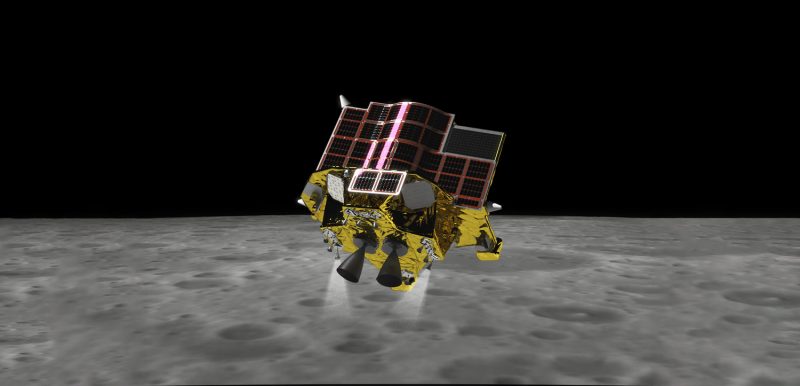
According to a report by Kyodo News on January 14, local time, the small probe "SLIM" of the Japan Aerospace Exploration Agency (JAXA) is set to attempt a historic landing on the moon on the 20th of this month. Currently in lunar orbit, SLIM will commence its final descent around midnight on the 20th from an altitude of 15 kilometers. The target landing site is near the "Mare Imbrium" crater, situated on the south side of the moon's equator. Should the mission succeed, Japan will become the fifth country to achieve a lunar landing, following the Soviet Union, the United States, China, and India.
The primary goal of SLIM is to demonstrate an unprecedented level of precision in lunar landing technology by aiming for a location within 100 meters of the designated site. Previous lunar missions by other nations have experienced landing errors ranging from a few kilometers to over ten kilometers, resulting in landings at significantly different locations.
During the final stage of descent, SLIM will decelerate from a speed of approximately 6,400 kilometers per hour and touch down within a circular range with a radius of about 100 meters.
SLIM was launched from Kagoshima Prefecture on September 7 last year aboard the Japanese H2A rocket No. 47. By optimizing fuel consumption, the probe completed a four-month journey and entered lunar orbit on December 25, 2023.
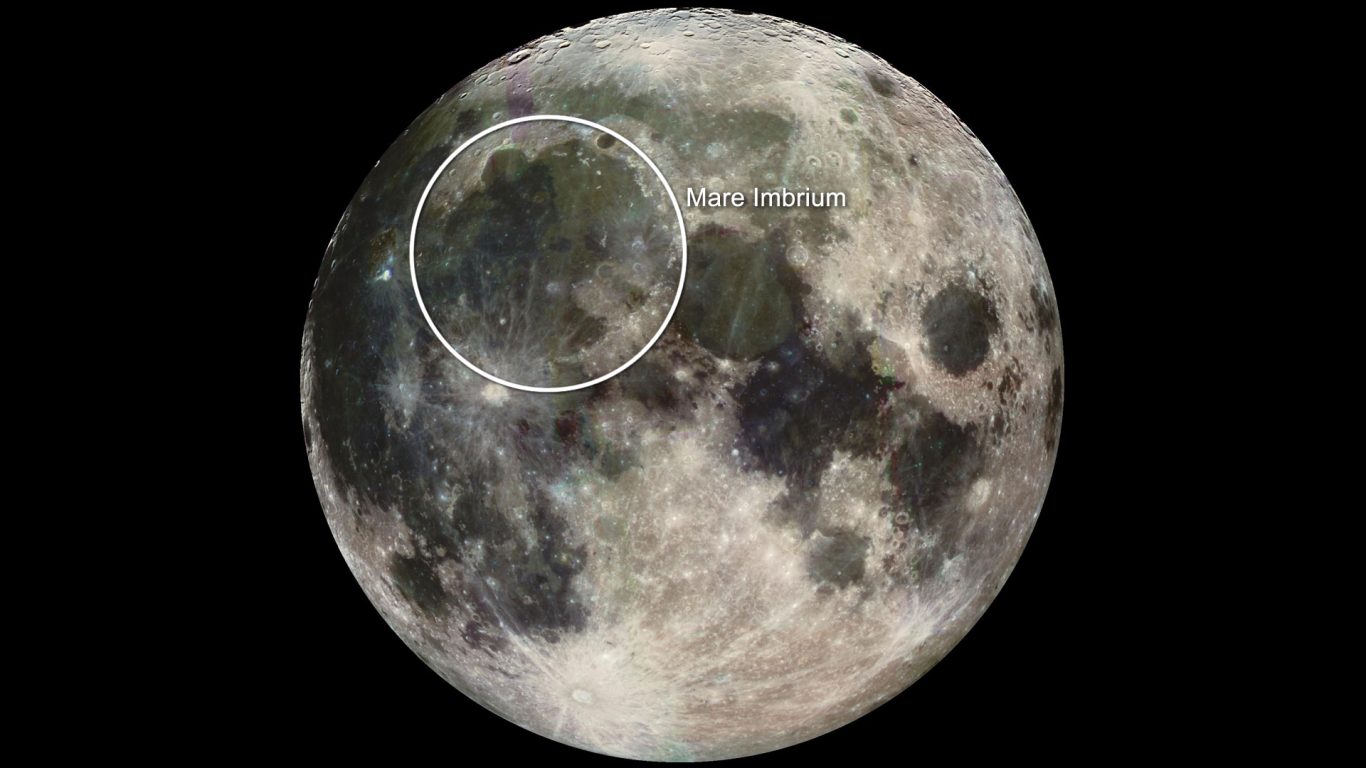 Image Credit: NASA/Luna Impact
Mare Imbrium, commonly referred to as the "Sea of Showers" or "Sea of Rains," is an expansive lava plain located within the Imbrium Basin on the lunar surface. It is renowned as one of the largest craters in the entire Solar System. The Imbrium Basin was formed as a result of a significant impact event during the Late Heavy Bombardment phase. This region encompasses a vast dark expanse situated in the moon's second quadrant, covering an impressive area of approximately 340,000 square miles (880,000 square kilometers). Estimated to be around 3.9 billion years old, the Imbrium Basin holds a prominent place in lunar geological history.
Japan's SLIM Probe to Attempt Historic Lunar Landing Near Mare Imbrium
Tags
A new NASA study indicates that Saturn's largest moon, Titan, may host naturally forming primitive cell-like structures called vesicles within its liquid hydrocarbon lakes. The finding offers fresh insight into…

Researchers at Carnegie Mellon University have developed “Zippy”, the world's smallest self-powered bipedal robot. Standing just 1.5 inches tall, Zippy can walk at over 0.5 miles per hour and is…

The University of Hong Kong (HKU) has surpassed Peking University (PKU) in the latest QS World University Rankings, becoming the highest-ranked Chinese institution and marking a significant achievement for the…

Over 80 exhibitors are showcasing more than 1,000 products — including Japanese sake, plum wine, and beer — at the ongoing Japan Sake Month, the largest Japanese sake trade fair…

China will expand its visa waiver policy to include six additional countries starting June 1, aiming to further stimulate inbound tourism. Under a reciprocal agreement with Uzbekistan, citizens of both countries…

SpaceX Cleared to Boost Starship Launch Frequency in Texas, Expands Nationwide Launch Ambitions
SpaceX has received regulatory approval to significantly increase the launch frequency of its Starship rocket from its Texas launch site, marking a key milestone in the company's strategy to scale…