Daifuku, a prominent Japanese logistics system company, has successfully developed an advanced automatic handling machine specifically designed for cutting-edge semiconductors. The company aims to venture into the field of transportation automation by introducing a handling machine that supports the "post-process" of finalizing semiconductor production. Traditionally, most post-processing tasks are performed manually in Asian factories. However, with the significant rise in labor costs across Asia, Daifuku believes that automating the transportation process could generate demand in Japan as well.
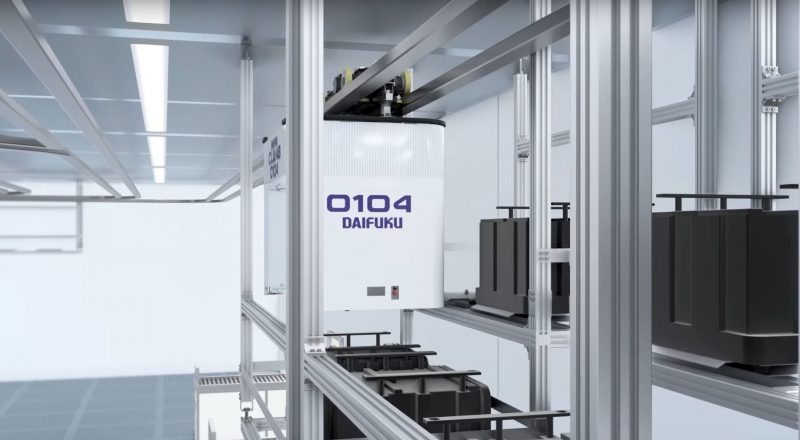
To cater to the needs of Japanese component manufacturers involved in semiconductor processing, Daifuku has created a new transporter system for shipping chip-laden boxes derived from semiconductor wafers. In line with this development, the company has announced an investment of approximately 33 billion yen (around $229 million USD) in the Shiga Works facility to bolster the production of equipment used in semiconductor and LCD panel manufacturing lines. The plan includes mass production of the automatic handling machine.
In September, Daifuku issued convertible corporate bonds denominated in euros and yen, raising approximately 60 billion yen, a portion of which will be allocated towards investment in the Shiga Works facility. This investment is expected to increase the plant's production capacity by 1.4 times.
While Daifuku has predominantly focused on producing transportation systems for clean rooms in the "pre-process" of circuit formation on wafers, the company is now expanding its offerings to include equipment for the post-processing phase. An example of their pre-process solution is a device that utilizes a ceiling-mounted trolley system to transport containers containing processed wafers.
The post-processing phase in semiconductor manufacturing involves cutting the wafer into individual chips, processing them, and transporting the chips. As this process typically requires a considerable amount of manpower, Japanese semiconductor manufacturers typically complete the pre-process stages domestically and then transport the wafers to lower-cost labor bases such as Malaysia for further processing.
In recent times, the surging labor costs in Asia have prompted semiconductor and electronic component manufacturers to seek ways to reduce expenses and enhance production efficiency through automation.
Automating the post-processing phase offers several advantages, including the prevention of human errors such as damage during manual transportation and equipment misplacement. Additionally, it is expected to shorten processing time. The semiconductor shortage during the COVID-19 pandemic has disrupted supply chains and halted automobile production. Some experts believe that automating the semiconductor manufacturing process can help mitigate such risks.
As semiconductor technology advances and components become increasingly miniaturized, the post-processing steps require a clean working environment similar to the preceding stages. Drawing from their experience in cleanrooms, Daifuku aims to apply their expertise to the post-processing process. By factoring in transportation costs to Asian bases, the introduction of automatic handling machines can lead to lower production costs for semiconductor manufacturers.
The trend of reshoring semiconductor production to home countries is gaining traction due to factors like heightened geopolitical risks. The Japanese government has offered substantial subsidies to attract factories from Taiwan Semiconductor Manufacturing Company (TSMC), the world's largest semiconductor foundry.
Given the rising labor costs in Asia and the shifting landscape of semiconductor manufacturing, including the return of production to home countries, the demand for automation in the industry is expected to increase in the future. Japanese domestic semiconductor manufacturers are increasingly inclined towards establishing comprehensive one-stop production systems that encompass both the pre-processing and post-processing stages.
The market size of semiconductor post-processing is projected to expand. According to data from Fuji Chimera Research, the global market size of semiconductor post-processing, encompassing semiconductor packaging-related components, is estimated to reach 10.2939 trillion yen in 2022. It is further anticipated to grow by 32% from 2022 to 13.6331 trillion yen in 2028, driven by increasing demand from pure electric vehicles (EVs) and data centers.
While Daifuku has not disclosed its operating income specifically from the semiconductor sector, its business scale is estimated to be around 200 billion yen. The company aims to achieve stable growth by capitalizing on the growing demand for automation in semiconductor post-processing and exploring new business opportunities in the field.
Japanese Company Advances Post-Process Automation with Cutting-Edge Semiconductor Handling Machine
Tags
MIT's Breakthrough Integrates GaN Transistors into Silicon Chips for Low-Cost, High-Performance Electronics
Gallium nitride (GaN), the world's second most widely used semiconductor after silicon, offers unique advantages for applications in lighting, radar systems, and power electronics. However, its high cost and complex…

Researchers at Carnegie Mellon University have developed “Zippy”, the world's smallest self-powered bipedal robot. Standing just 1.5 inches tall, Zippy can walk at over 0.5 miles per hour and is…

The University of Hong Kong (HKU) has surpassed Peking University (PKU) in the latest QS World University Rankings, becoming the highest-ranked Chinese institution and marking a significant achievement for the…

Breakthrough Silicon-Based Polymer Exhibits Semiconductor Properties, Paving Way for Flexible Electronics
A research team from the University of Michigan has made a groundbreaking discovery: a novel silicon-based material that exhibits semiconductor properties—an unprecedented feat for this class of compounds. The findings…

Over 80 exhibitors are showcasing more than 1,000 products — including Japanese sake, plum wine, and beer — at the ongoing Japan Sake Month, the largest Japanese sake trade fair…

China will expand its visa waiver policy to include six additional countries starting June 1, aiming to further stimulate inbound tourism. Under a reciprocal agreement with Uzbekistan, citizens of both countries…