India has accomplished a remarkable milestone in its space exploration endeavors by achieving a successful landing of a probe on the moon's south pole. The achievement makes India the fourth country, following Russia, the United States, and China, to accomplish this feat. The Chandrayaan-3 (Moon Vehicle 3) mission was launched on July 14, 2023, and comprised of a lander and a rover. On August 23, 2023, at 6:34 pm local time, the lander and rover successfully touched down on the lunar surface, marking a significant moment in India's space exploration program.
Prime Minister Narendra Modi, along with millions of people, witnessed the live broadcast of the landing and hailed it as a "moment of pride" for India. He extended his congratulations to the Indian Space Research Organisation (ISRO) for their remarkable achievement, emphasizing that it was a significant moment for all 1.4 billion Indians.
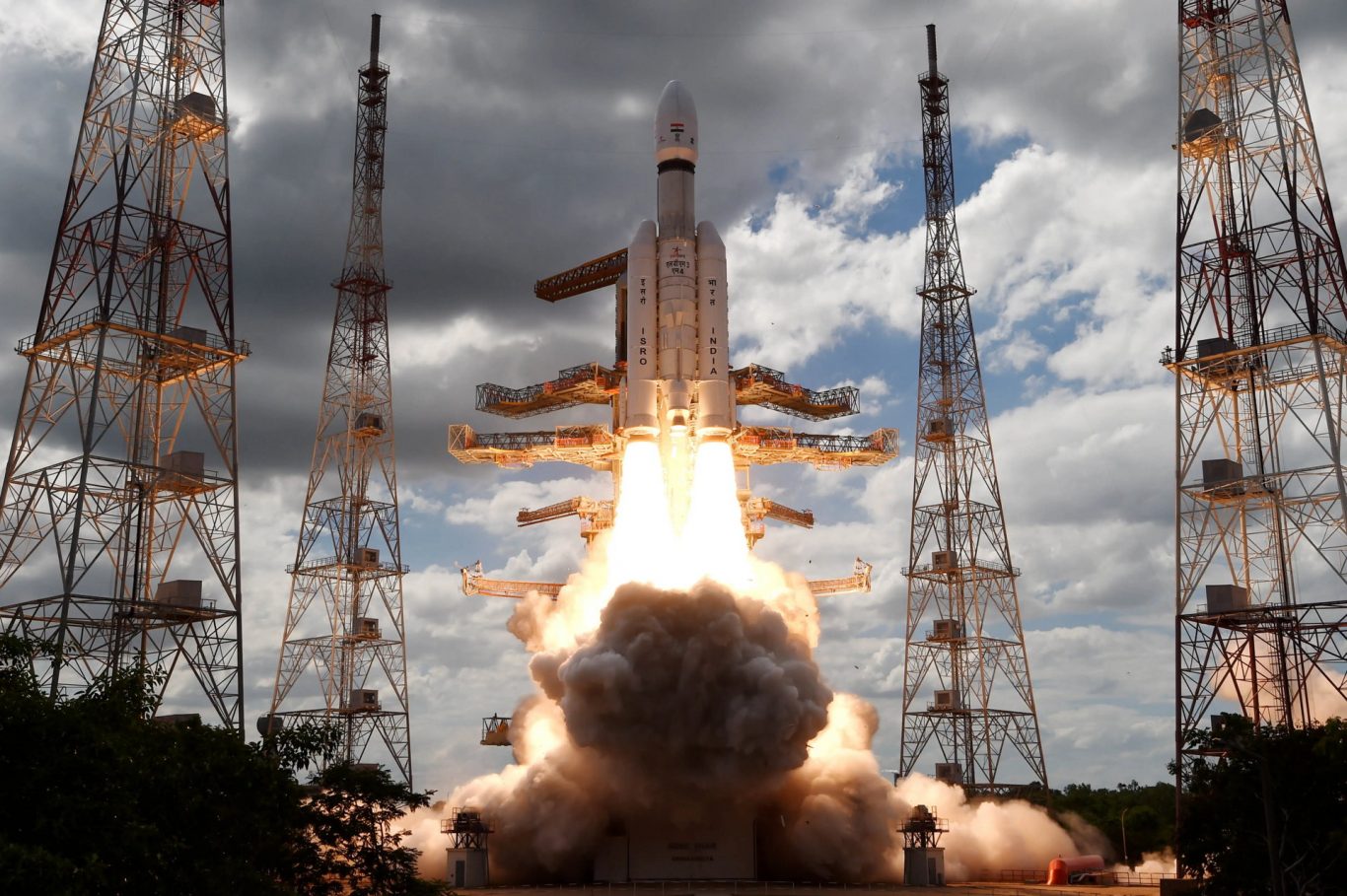 Image Credit: Wikipedia/ISRO: Chandrayaan-3
The Chandrayaan-3 mission was India’s second attempt to land on the moon, after the failure of Chandrayaan-2 in 2019, which lost contact with the ground control during its descent and crashed. ISRO said that it had learned from its previous mistakes and improved its landing algorithm, propulsion system, landing legs, solar panels and fuel capacity. It also selected a wider landing site with fewer rocks and craters to increase the chances of success.
The Chandrayaan-3 probe was equipped with a range of scientific instruments aimed at conducting experiments on the lunar surface. Among them was a spectrometer designed to analyze the mineral composition of the moon. The lunar south pole held significant scientific interest due to its location in a region that experiences permanent shadowing. Scientists believe that this area may harbor frozen water and rare elements, making it particularly intriguing. Those resources could prove invaluable for future lunar missions and potential human settlements, as they could support various essential needs and enable sustained exploration and habitation on the moon.
The Chandrayaan-3 probe was designed with a specific operational lifespan of 14 days, corresponding to one lunar day. It was not anticipated to endure the extreme conditions of the subsequent lunar night, which extends for another 14 days and exposes the surface to temperatures as frigid as minus 180 degrees Celsius. To generate power, the probe depended on solar panels and did not incorporate a radioactive heat source to maintain warmth during the lunar night. Given these limitations, the mission focused on maximizing the probe's functionality and scientific operations within the allotted timeframe, making the most of the available resources while considering the challenging lunar environment.
India's lunar mission stood out for its remarkable cost-effectiveness and efficiency. The Chandrayaan-3 mission was particularly notable in this regard. With a total cost of 6.15 billion rupees (around 74.6 million USD), it demonstrated significant cost reduction compared to its predecessor, Chandrayaan-2, which had a budget of 9.78 billion rupees (around 118.63 million USD). The Indian Space Research Organisation (ISRO) achieved this cost reduction by streamlining the scientific payload and eliminating backup probes, effectively simplifying the mission's scope.
India's space program has demonstrated commendable progress in recent years, displaying ambitious aspirations to explore celestial bodies such as Mars, Venus, and asteroids. Alongside these ventures, India is actively developing its own manned space program, with the goal of launching its inaugural astronaut into orbit by 2024. These endeavors reflect India's determination to emerge as a significant participant in the global space domain, highlighting its technological expertise and scientific capabilities.
India's Chandrayaan-3 Successfully Lands at the South Pole of the Moon
Tags
A new NASA study indicates that Saturn's largest moon, Titan, may host naturally forming primitive cell-like structures called vesicles within its liquid hydrocarbon lakes. The finding offers fresh insight into…
Researchers at Carnegie Mellon University have developed “Zippy”, the world's smallest self-powered bipedal robot. Standing just 1.5 inches tall, Zippy can walk at over 0.5 miles per hour and is…
The University of Hong Kong (HKU) has surpassed Peking University (PKU) in the latest QS World University Rankings, becoming the highest-ranked Chinese institution and marking a significant achievement for the…

Over 80 exhibitors are showcasing more than 1,000 products — including Japanese sake, plum wine, and beer — at the ongoing Japan Sake Month, the largest Japanese sake trade fair…

China will expand its visa waiver policy to include six additional countries starting June 1, aiming to further stimulate inbound tourism. Under a reciprocal agreement with Uzbekistan, citizens of both countries…

SpaceX Cleared to Boost Starship Launch Frequency in Texas, Expands Nationwide Launch Ambitions
SpaceX has received regulatory approval to significantly increase the launch frequency of its Starship rocket from its Texas launch site, marking a key milestone in the company's strategy to scale…