To evade predators, some butterflies have evolved intricate “false head” structures on their wings—patterns and markings that mimic the appearance of a head to mislead attackers. A study by the Indian Institute of Science Education and Research (IISER), published in Proceedings of the Royal Society B: Biological Sciences, analyzed nearly 1,000 butterfly species to trace the evolutionary development of this survival strategy.
The research identifies five key traits that collectively form the false head illusion: false antennae, bright coloration, converging wing lines, prominent wing spots, and head-like contour markings. Phylogenetic analysis revealed a stepwise evolution of these features: bright coloration appeared first, followed by converging lines, false antennae, bright spots, and finally contour refinement. Modeling showed that the first four traits are tightly correlated and work together to enhance the deceptive effect.
The false head significantly reduces mortality risk, as predators misled into attacking the wing tip—rather than the actual head—inflict less damage, preserving the butterfly’s ability to fly and reproduce. The researchers suggest this trait emerged through long-term natural selection, though its precise evolutionary advantages warrant further investigation.
This study is the first to systematically map the evolution of butterfly false heads, offering new insights into the complexity of animal defense mechanisms.
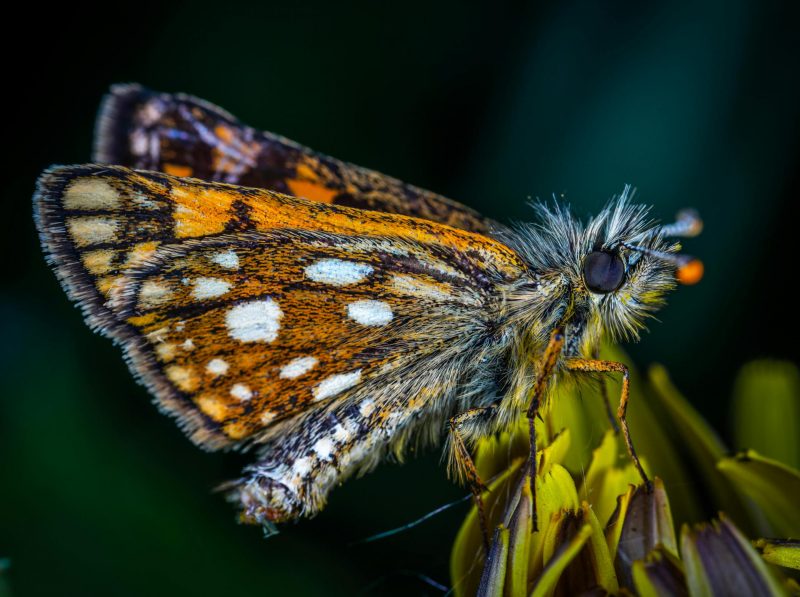
Image Credit: Egor Kamelev
Tags
Cicada wings possess a little-known superpower: the ability to kill bacteria. Researchers have now revealed the underlying mechanism for the first time, a discovery that could pave the way for…