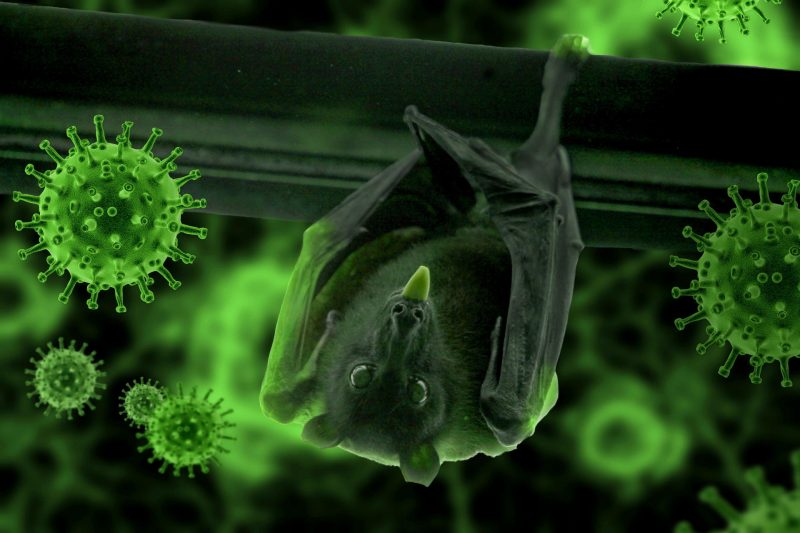
Bats are natural reservoirs for several highly pathogenic viruses, including coronaviruses related to Middle East Respiratory Syndrome (MERS) and Severe Acute Respiratory Syndrome (SARS), as well as Marburg and Nipah viruses. Unlike humans, who often suffer severe symptoms upon infection, bats typically remain asymptomatic. To investigate this phenomenon, an international team led by the Helmholtz Centre for Infection Research (HZI) in Germany has developed an innovative organoid-based research platform, revealing the antiviral defense mechanisms of bat mucosal tissues. The findings were published in Nature Immunology.
Focusing on the Egyptian fruit bat—a natural host of the Marburg virus—the researchers cultivated organoids from respiratory and intestinal tissues to model how viruses invade mucosal barriers. Due to the challenges of studying live bats, organoids serve as an ideal alternative. In a Biosafety Level 4 (BSL-4) facility, the team compared the response of bat and human airway organoids to Marburg virus infection. Remarkably, bat cells exhibited stronger baseline antiviral activity even before infection occurred.
Further analysis revealed that bat mucosal epithelial cells possess a highly efficient innate immune system, particularly with regard to interferon responses. Type III interferons play a pivotal role: upon infection, bat organoids rapidly produce large quantities of these interferons, maintaining long-term protection through a self-amplifying mechanism. Gene editing experiments confirmed that disruption of this interferon system significantly reduced antiviral defense. This mechanism allows bats to suppress viral replication early, while delayed responses in human cells contribute to uncontrolled viral spread.
This study not only highlights the unique adaptability of the bat immune system but also offers valuable insights for preparing against future viral threats.
Bat Organoids Reveal Key to Their Resilience Against Deadly Viruses
Tags
As the world focuses on the deadly H5N1 bird flu, another avian influenza virus—H9N2—is quietly gaining new abilities. Once considered a mild strain limited to birds, H9N2 is showing signs…

Archaeologists have uncovered stone tools at the Little Paxton site, about 80 kilometers east of London, dating back roughly 440,000 years. Using advanced infrared radiofluorescence dating, researchers confirmed the artifacts…

Although all vertebrates possess a pelvis, only humans have evolved a structure optimized for efficient, long-distance bipedal locomotion. This evolutionary transformation took over five million years, yet the precise developmental…

Why do bats frequently collide with wind turbines? A new scientific study points to visual misperception as a key factor. While the impact of turbines on birds has long been…

Over 10 million years ago, ancient African apes gained extra nutrition by eating fallen, fermented fruit—a behavior that may have laid the evolutionary foundation for humans' alcohol tolerance. A recent…

Although the emotions and thoughts of past generations left no direct trace, cultural artifacts such as paintings, literature, and music serve as “cognitive fossils” that offer insight into historical psychology.…