Millions of years ago, iguanas from North America may have made a remarkable transoceanic journey by drifting on floating vegetation across the Pacific Ocean, eventually reaching and settling on islands in the South Pacific. This extraordinary voyage could represent the longest known oceanic migration by a terrestrial vertebrate, according to a recent study published in the Proceedings of the National Academy of Sciences (PNAS).
The evolutionary history of iguanas has long puzzled scientists, particularly due to a notable outlier in their distribution. While all known members of the iguana family are native to the Americas, one distinct exception exists: the Brachylophus, or Fijian iguana, found only on islands such as Fiji.
A research team from the University of San Francisco analyzed the evolutionary relationships of more than 200 species of iguanas and related lizards. Their findings revealed that Fijian iguanas are most closely related to the desert iguana (Dipsosaurus dorsalis), which inhabits the deserts of Mexico and the southwestern United States. Genetic data, together with fossil evidence and geographic distribution patterns, suggest that the ancestors of Fijian iguanas may have drifted across the ocean from the North American coast.
The team estimates that this migration occurred between 31 and 34 million years ago, marking the point at which Fijian and desert iguanas began to diverge evolutionarily. Spanning more than 8,000 kilometers, this voyage stands as the longest known transoceanic migration by a land-dwelling vertebrate.
Ancient Iguanas May Have Undertaken Earth's Longest Oceanic Migration
Published on Mar 18, 2025
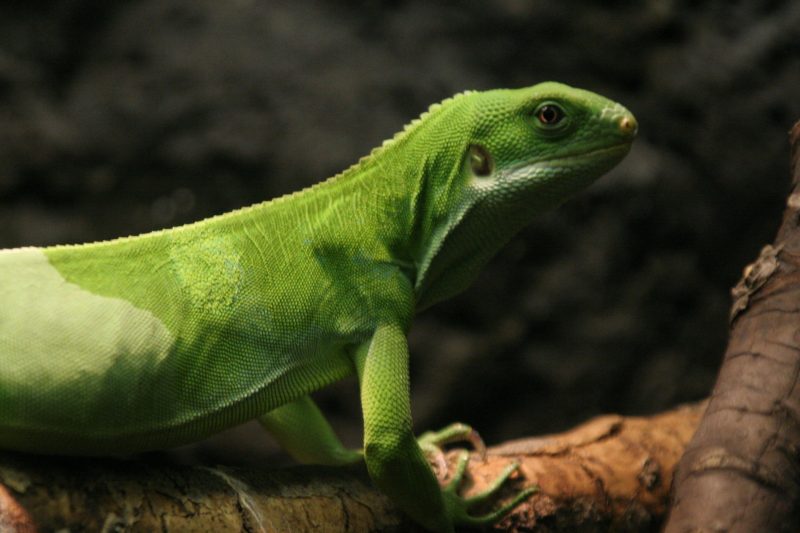
Image Credit: Wikipedia/Brachylophus
Tags
South Asia is renowned for its remarkable diversity, with a population of 1.5 billion people encompassing various ethnicities, languages, religions, castes, and customs. A groundbreaking study, representing the largest whole-genome…