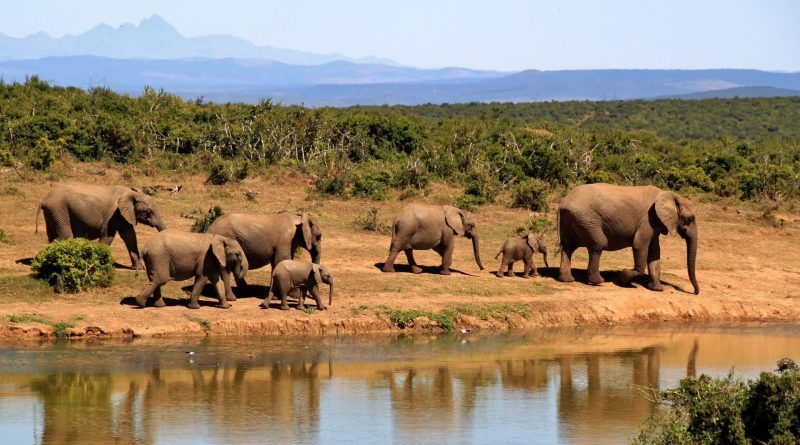
The elephant's trunk is a remarkable feature, known for its softness and flexibility. It is the most sensitive organ among vertebrates, containing a remarkable 40,000 muscles and an incredibly developed nervous system. But how did the trunks of the elephant's ancestors compare in terms of development?
Researchers have delved into the diversity and evolution of the proboscis mandible, along with its co-evolution with the elephant trunk, shedding light on the feeding methods of early elephants and the unique evolution of related organs. The research has revealed that in early elephants, the elongated mandible and lower incisors played a primary role in feeding, while the trunk served as an auxiliary tool. Different mandibular shapes among early elephants corresponded to varying ecological adaptability. As the environment gradually became drier and colder, shovel-toothed elephants proved more adept at adapting to relatively open ecological environments and feeding on herbaceous plants. This ultimately spurred the development of the elephant trunk's gripping function and flexibility.
As early as the middle Miocene, approximately 17 to 15 million years ago, the shovel-shaped mandible of the shovel-toothed elephant had already developed a method of wrapping plants with its trunk and cutting them off with its mandibles. This serves as the earliest evidence of the curling function in elephant trunks.
In this study, researchers conducted a comparative analysis of the functional morphology of three main types of long-jawed mastodons: Shovelodon, Codonodon, and Bogodon. They discovered distinct differences in mandibular shapes among these species.
The researchers also conducted an in-depth examination of the feeding habits and methods of the three elephants. The results revealed that the shovel-toothed elephant, hog-toothed elephant, and codon employed different feeding strategies and inhabited different environments. The shovel-toothed elephant thrived in relatively open environments, utilizing its mandibles to cut vertically growing plants while employing its flexible trunk to curl and hold the plants. In contrast, the hog-toothed elephant inhabited closed environments, where it specialized in cutting horizontally or obliquely growing branches. It used its trunk to press the branches and cooperated with its mandibles to complete the feeding process. The codon, residing in intermediate habitats, adopted diverse feeding methods, enabling it to adapt effectively to both woodlands and grasslands.
The expansion of spadedons into open habitats ceased due to an extinction event, including the spadedons, triggered by the Tortona extreme heat event at the beginning of the late Miocene. However, the spadedons were succeeded by other species, which continued spreading into open habitats during the late Miocene. As elephant trunks evolved to become more flexible and possess stronger gripping capabilities, the feeding function of elephants shifted entirely to the proboscis. This ultimately led to the shortening of the mandible and lower incisors, transforming the original feeding organs. The study highlights that the adaptation of feeding behavior in open environments acted as a "catalyst" for the evolution of the elephant's trunk grasping function.
The researchers noted that this study provides significant evidence for understanding the evolutionary and ecological background of the trunk and mandible in this important group of elephants. Additionally, it offers insights into how proboscis adapt to the environment and how environmental changes shape the development of unique organs, furthering our understanding of evolution.
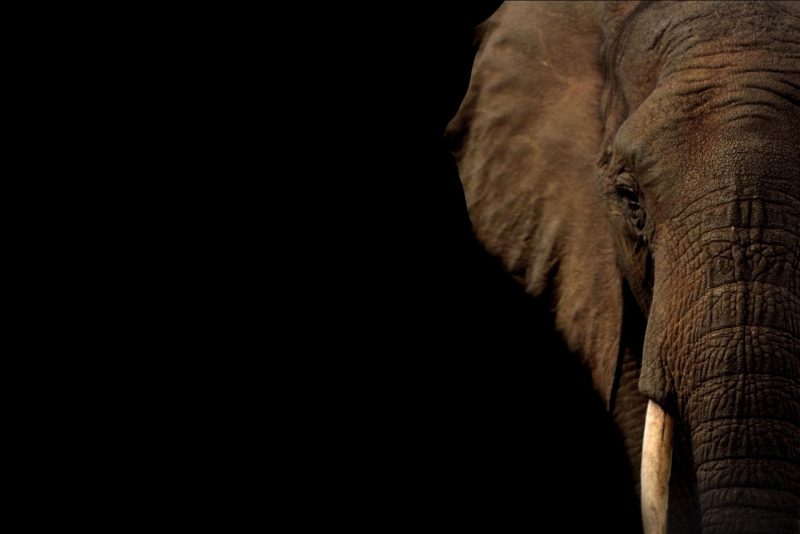
Image Credit: Bisakha Datta
Tags
Elephants are currently the largest terrestrial mammals alive. Asian elephants, in particular, can reach a shoulder height of 2-3.6 meters and weigh between 3-5 tons, while African elephants can grow…