Sound is a type of mechanical wave that requires a medium, such as air, water, or solids to propagate. In a vacuum where no medium exists, sound cannot travel. However, a recent study conducted by two physicists from the University of Jyväskylä in Finland has revealed that under specific conditions, sound can indeed propagate over a very short distance in a vacuum.
The study, which appeared in the journal Communications Physics, detailed the significant accomplishment of the researchers who achieved the first-ever direct transmission of sound between two zinc oxide (ZnO) crystals separated by a vacuum gap measuring approximately 100 nanometers. This remarkable finding demonstrates that sound can effectively tunnel through a vacuum barrier.
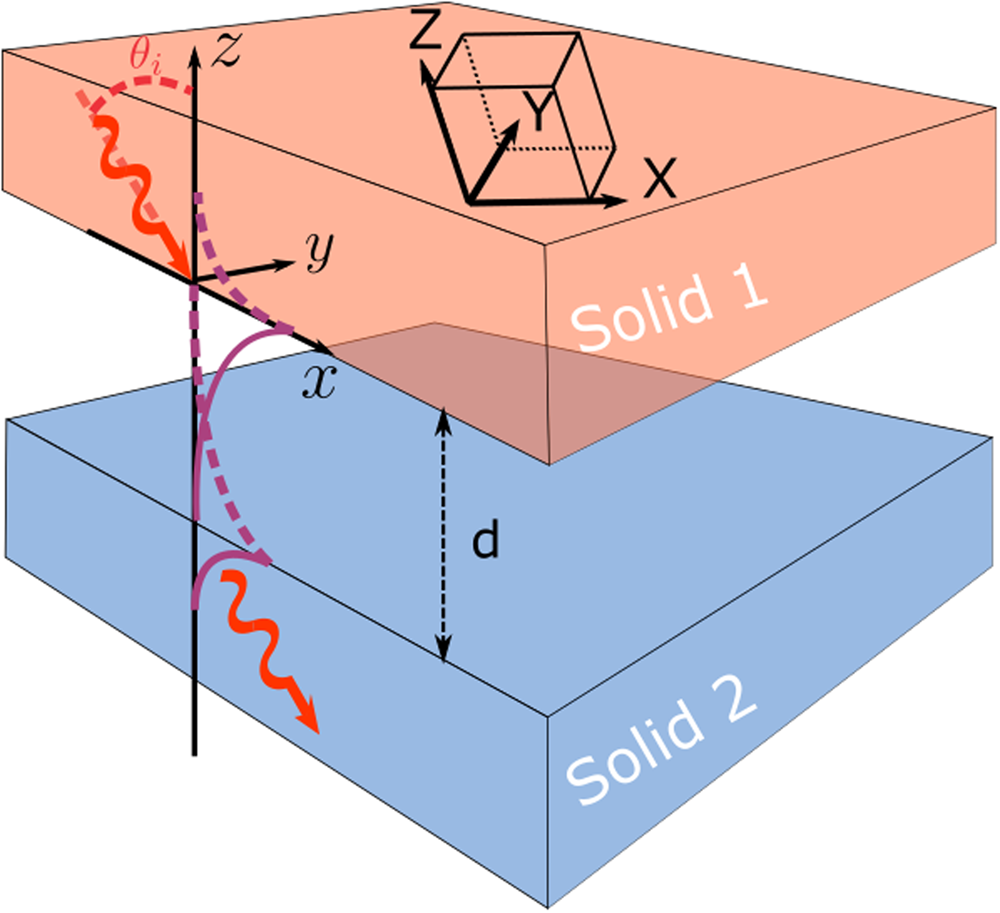 Image Credit: Acoustic waves tunneling
Zinc oxide (ZnO) crystals are a special type of piezoelectric material that generates an electric field when subjected to external pressure. Under the influence of the electric field, the ZnO crystal also experiences mechanical deformation. Therefore, when sound is applied to one crystal, it undergoes mechanical deformation, generating an electric field. This electric field, in turn, leads to a corresponding change in the electric field of the other crystal. As a result, the second crystal vibrates in response to the electric field, faithfully reproducing the original sound.
This groundbreaking discovery not only deepens physicists' understanding of the underlying principles of quantum mechanics, but also paves the way for innovative technological advancements in the field of sound transmission. The implications are far-reaching, as the researchers propose that this technique could potentially enhance the capabilities of microelectromechanical components found in smartphones and other voice-enabled devices, leading to improved performance and novel applications.

Image Credit: Rosy
Tags
Nearly ten months after completing its first subsonic flight in March last year, Boom Supersonic's prototype test aircraft, XB-1, successfully broke the sound barrier three times during its 12th test…