A team of researchers from multiple universities and research institutes in South Korea has made a breakthrough in solid oxide fuel cells (SOFCs) by developing a catalyst coating technology that significantly enhances their performance in just four minutes.
Fuel cells are garnering attention as a clean and efficient energy source to propel the hydrogen economy. Solid oxide fuel cells, in particular, boast the highest power generation efficiency and can utilize a wide range of fuels such as hydrogen, biogas, and natural gas. They also enable combined heat and power generation by utilizing the heat produced during the process, making them a focal point of active research and development.
The performance of solid oxide fuel cells is largely dependent on the kinetics of the oxygen reduction reaction (ORR) at the air electrode, also known as the cathode. However, the air electrode tends to exhibit slower reactivity compared to the fuel electrode, or anode, thereby limiting the overall reaction rate. To overcome this sluggish kinetics, researchers have been exploring new air electrode materials with superior ORR activity. Nevertheless, these materials often lack chemical stability and necessitate further investigation.
The research team introduced an electrochemical deposition method that operates at ambient temperature and pressure, eliminating the need for intricate equipment or complex processes. By immersing the composite electrode in a solution containing praseodymium (Pr) ions and applying an electric current, hydroxide ions (OH-) generated on the electrode surface react with the praseodymium ions to form a precipitate that uniformly coats the electrode. The coating undergoes a drying process and is transformed into an oxide that remains stable and effectively enhances the oxygen reduction reaction of the electrode, even under high-temperature conditions. Remarkably, the entire coating process is completed within a mere four minutes.
Furthermore, the research team elucidated the mechanism by which the coated nanocatalyst facilitates surface oxygen exchange and ion conduction, providing fundamental evidence for the efficacy of the catalyst coating method in addressing the challenge of low reaction rates in composite electrodes.
Revolutionary Catalyst Coating Boosts Fuel Cell Performance in 4 Minutes
Published on Jun 28, 2024
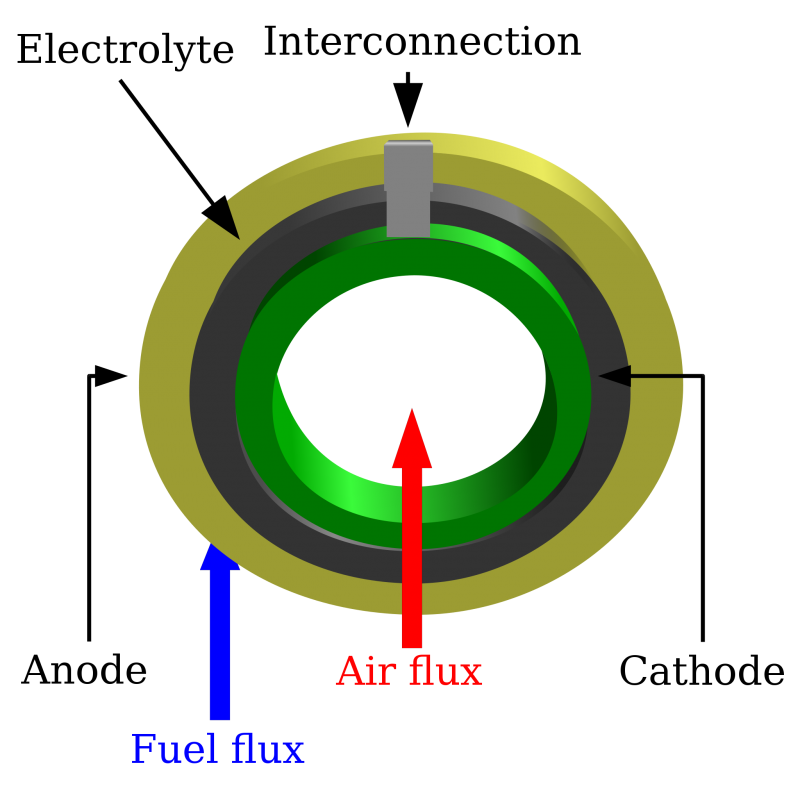
Image Credit: Wikipedia/Solid Oxide Fuel Cell
Tags
Researchers from the University of Minnesota Twin Cities have published groundbreaking work in the journal Science, introducing a novel catalytic method that selectively burns specific molecules within hydrocarbon mixtures. This…

A research team at the Pohang University of Science and Technology (POSTECH) in South Korea has developed a groundbreaking strategy to enhance the durability of lithium-rich layered oxide (LLO) materials.…
Most of our time is spent indoors, where the air we breathe in offices, schools, or homes can significantly impact our overall health. However, most air purification systems are expensive…