Researchers at Pennsylvania State University have made a significant breakthrough in the field of nanomaterials by inducing chirality in borophene, an atomically thin boron material. Borophene, which was first synthesized in 2015, surpasses graphene in several aspects, including conductivity, thinness, lightness, strength, and flexibility. This new development adds versatility to borophene, making it suitable for advanced sensors and implantable medical devices.
The team employed a novel method to induce chirality in borophene, allowing it to interact with various biological units, such as cells and protein precursors, in unique ways. By using a solution-state synthesis technique, the researchers synthesized borophene platelets, similar to cell fragments found in blood. This method involves exposing powdered materials in a liquid to external factors like heat or pressure until they combine into the desired product.
Through their study, the researchers discovered that specific amino acids, such as cysteine, bind to borophene at different locations based on their chirality. To observe these interactions, the chiralized borophene platelets were exposed to mammalian cells, revealing that chirality influenced the way they interacted with cell membranes and penetrated the cells.
This groundbreaking finding paves the way for various future applications, including the development of high-resolution medical imaging with precise cell interaction tracking and improved drug delivery through accurate material-cell interactions. Ultimately, understanding and controlling how borophene interacts with cells could lead to the creation of safer and more effective implantable medical devices.
Researchers Induce Chirality in Borophene, Expanding Potential for Advanced Sensors and Implantable Medical Devices
Published on May 30, 2024
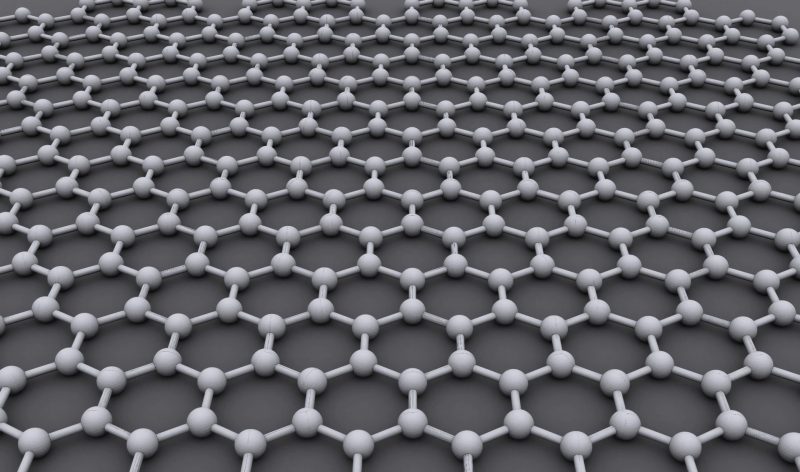
Image Credit: Wikipedia/Graphene
Tags
A research team from McGill University, Canada, has unveiled a groundbreaking innovation — the world's first micro bio-printer with a diameter of just 2.7 millimeters, as reported in the journal…
Researchers at Brunel University London have discovered that Pseudomonas aeruginosa, a common hospital pathogen, can degrade polycaprolactone (PCL), a biodegradable plastic widely used in medical devices such as sutures, implants,…
An international research team led by Penn State University has developed a miniature flexible robot capable of navigating through disaster debris to locate survivors or delivering medication precisely within the…