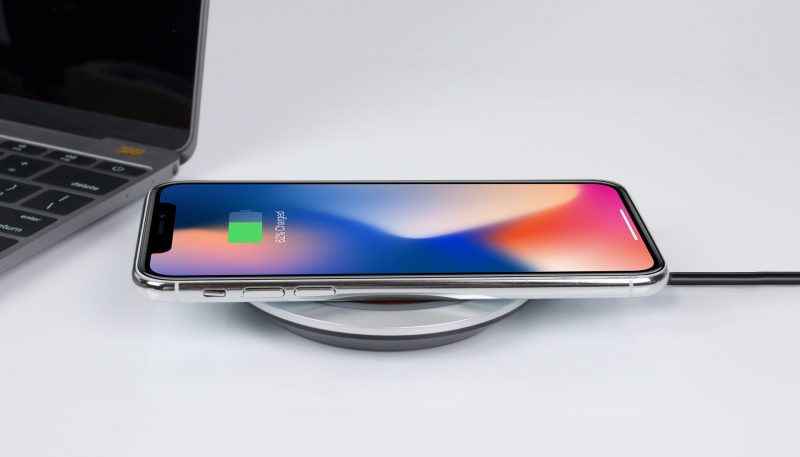
The Wireless Charging Alliance has unveiled the impending launch of the next-gen wireless charging standard, Qi v2.0, promising magnetic connection, faster charging speeds, and heightened efficiency. The initial wave of Qi2-certified products is slated for release during the upcoming Christmas shopping season, primarily targeting the Apple iPhone 15 series. Leading accessory manufacturers such as Belkin, Mophie, Anker, and Aircharge have already teased forthcoming products aligned with this updated standard.
Qi2's evolution from the long-standing Qi wireless charging standard is prominently marked by a surge in charging power, elevating from 5W to 15W with future plans aiming for a peak power of 50W. Additionally, Qi2 introduces pre-charging foreign object detection, integrates 55 new data packets, and incorporates support for reverse charging. Manufacturers now possess increased design flexibility, allowing custom coil configurations (including magnetic components), liberating products from standardized designs. This versatility even extends to compatibility with XR head-mounted display devices.
Following the official release of iOS 17.1, which introduced support for Magnetic Power Profile (MPP) 15W charging, devices certified under Qi2 theoretically enable faster charging for the iPhone 15 series without necessitating MFi certification.
Despite wireless charging appearing to liberate users from wired connections, it confronts challenges. While eliminating the need for physical cable insertion into the device, the mobile device still requires contact with a wireless charging base, resulting in bulkier bases connected to power sources via wires. Hence, the term "wireless charging" seems somewhat overstated, prompting users to believe that its fundamental essence remains unchanged.
Technologically, wireless charging confronts obstacles. The inclusion of coils and rectifier filter circuits presently limits charging efficiency, hovering between 65% and 75%, significantly lower than wired fast charging, which achieves up to 95% efficiency. Energy lost during the conversion process translates into heat dissipation issues, necessitating high-power wireless fast charging adapters to incorporate efficient active cooling systems, introducing operational noise concerns.
At this juncture, wired fast charging emerges as the more practical choice for most users. It boasts higher charging power and significantly shorter charging times compared to wireless charging. Additionally, various Android manufacturers feature private fast charging protocols, delivering peak powers of 100W or even up to 240W. Publicly accessible protocols like USB PD (USB Power Delivery) and QC (Quick Charge) also outperform wireless fast charging. USB PD 3.1 supports voltages up to 48V, reaching peak powers of 240W.
Despite wired fast charging's technical capabilities surpassing 240W, mainstream models rarely leverage this configuration. The 100W wired fast charging remains prevalent, a result of manufacturers' considerations encompassing demand, user experience, and costs. A shift to 200W peak power would inevitably escalate costs, whereas these resources could enhance other phone configurations such as storage and screen.
In terms of user experience, 100W-level fast charging typically suffices for most users. Even models equipped with over 200W wired fast charging require approximately ten minutes to fully charge, falling short of doubling charging speeds.
Importantly, wired fast charging not only reduces charging times but also incurs fewer additional costs for users. Unlike optional wireless charging components, wired charging accessories are often included with the phone, offering a more cost-effective solution for those without additional charging needs.
While wireless charging offers convenience, it grapples with efficiency, heat dissipation, and application scenarios, positioning wired fast charging as the more pragmatic choice.
Qi v2.0 Unveiled: Faster Wireless Charging, Yet Wired Charging Prevails
Tags
Researchers at Carnegie Mellon University have developed “Zippy”, the world's smallest self-powered bipedal robot. Standing just 1.5 inches tall, Zippy can walk at over 0.5 miles per hour and is…
The University of Hong Kong (HKU) has surpassed Peking University (PKU) in the latest QS World University Rankings, becoming the highest-ranked Chinese institution and marking a significant achievement for the…

Over 80 exhibitors are showcasing more than 1,000 products — including Japanese sake, plum wine, and beer — at the ongoing Japan Sake Month, the largest Japanese sake trade fair…

China will expand its visa waiver policy to include six additional countries starting June 1, aiming to further stimulate inbound tourism. Under a reciprocal agreement with Uzbekistan, citizens of both countries…

SpaceX Cleared to Boost Starship Launch Frequency in Texas, Expands Nationwide Launch Ambitions
SpaceX has received regulatory approval to significantly increase the launch frequency of its Starship rocket from its Texas launch site, marking a key milestone in the company's strategy to scale…

China has expressed strong opposition to the United States' announcement of imposing so-called "reciprocal tariffs" on its trading partners, vowing to take resolute countermeasures to defend its legitimate rights and…