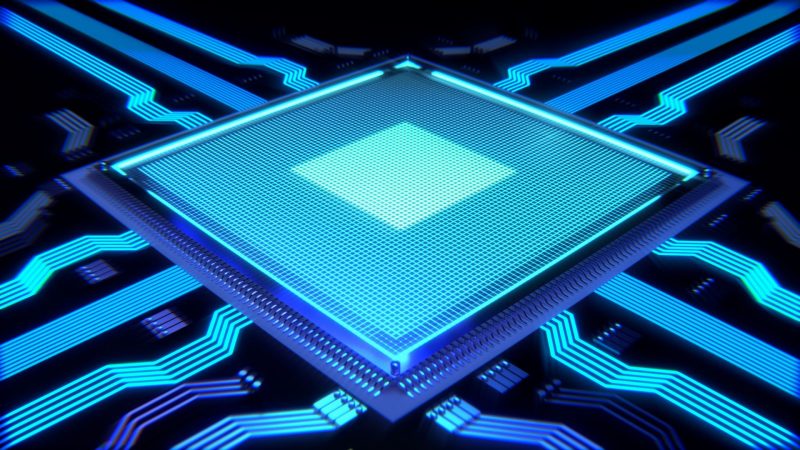
Google scientists recently announced a major breakthrough in quantum computing, which was published on the ArXiv platform as a preprint paper. The team upgraded their 53-qubit Sycamore processor to 70 qubits, resulting in a performance increase of 241 million times that of the previous version, despite being affected by factors such as coherence time.
The scientists conducted a random circuit sampling task to test the quantum computer's ability and efficiency at solving complex problems. Google reported that the most advanced supercomputer in the industry, Frontier, would take 47.2 years to complete the same task. However, the 53-qubit Sycamore processor completed the task in just 6.18 seconds, while the upgraded 70-qubit version was even faster.
This breakthrough has significant implications for the future of computing and might lead to the further development of quantum computers. Some pretty hard problems on classical supercomputers may be solved on quantum computers quite easily. However, there are still challenges to be overcome, such as improving the coherence time and reducing error rates, before quantum computers become widely accessible and practical for real-world applications.
In 2019, Google made a breakthrough in quantum computing when its 54-qubit Sycamore processor was able to complete a computation in just 200 seconds that would have taken the world's most powerful supercomputer over 10,000 years.
Google Claims Quantum Computer Breakthrough with 70-Qubit Sycamore Processor
Tags
Researchers at Carnegie Mellon University have developed “Zippy”, the world's smallest self-powered bipedal robot. Standing just 1.5 inches tall, Zippy can walk at over 0.5 miles per hour and is…
The University of Hong Kong (HKU) has surpassed Peking University (PKU) in the latest QS World University Rankings, becoming the highest-ranked Chinese institution and marking a significant achievement for the…

Over 80 exhibitors are showcasing more than 1,000 products — including Japanese sake, plum wine, and beer — at the ongoing Japan Sake Month, the largest Japanese sake trade fair…

Subatomic particles such as quarks can be linked by "strings" of force fields that release energy when stretched to the point of breaking. Recently, two international research teams successfully simulated…

China will expand its visa waiver policy to include six additional countries starting June 1, aiming to further stimulate inbound tourism. Under a reciprocal agreement with Uzbekistan, citizens of both countries…

SpaceX Cleared to Boost Starship Launch Frequency in Texas, Expands Nationwide Launch Ambitions
SpaceX has received regulatory approval to significantly increase the launch frequency of its Starship rocket from its Texas launch site, marking a key milestone in the company's strategy to scale…