May 31 is World No Tobacco Day every year, and its origin has an interesting history. Initially, the World Health Organization (WHO) recommended celebrating it on April 7th, starting from November 1987. However, it was soon realized that April 7th coincided with the anniversary of the founding of the WHO, which created conflicts with other WHO activities.
Therefore, in 1988, the observance of World No Tobacco Day was shifted to May 31. The change was made because June 1st is recognized as International Children's Day. To emphasize the significance of protecting children's health, some individuals proposed the slogan "For Children's Tomorrow" in relation to No Tobacco Day.
Tobacco has its origins in the Americas, where it was initially used by Native Americans as a medicinal herb to treat snake bites. Over time, it began to be incorporated into religious and ceremonial practices. When Christopher Columbus encountered tobacco during his voyages to the Americas, it was introduced to Europe, and its cultivation gradually expanded worldwide.
In its early introduction to Europe, tobacco continued to be primarily used for its medicinal properties. The name "nicotine" actually derives from Jean Nicot, the French ambassador to Portugal during that period. Nicot sent tobacco to the Queen of France to alleviate her headaches, and his association with tobacco led to the naming of the plant's active compound.
During that time, Europeans regarded tobacco as a "miracle medicine" capable of curing various ailments. In the UK, the perception of tobacco as a medicinal substance was so prevalent that it could only be obtained with a doctor's prescription from a pharmacy.
Since the popularity of tobacco, there have been varying opinions regarding its benefits and harms. However, it took until the 20th century for a growing body of evidence to confirm its detrimental effects. In 1939, Muller of the University of Cologne first reported on the link between smoking and lung cancer, bringing the harmfulness of smoking into public awareness.
A significant milestone came in 1950 when the UK and the US published the report titled "Smoking and Health". The report presented a comprehensive analysis of epidemiological studies, tobacco consumption patterns, chemical components of tobacco and their carcinogenic properties, as well as the effects of smoking on experimental animals and humans. The report unequivocally demonstrated the harmful impact of smoking on human health, particularly its close association with lung cancer and cardiovascular diseases.
Despite calls for smoking bans at various levels, the prevalence of tobacco use continues due to a variety of factors, including profit motives and individuals' dependence on addictive and stimulating products. This reality has created significant challenges in achieving widespread smoking cessation. However, it is crucial to emphasize that the damaging effects of smoking extend far beyond the lungs.
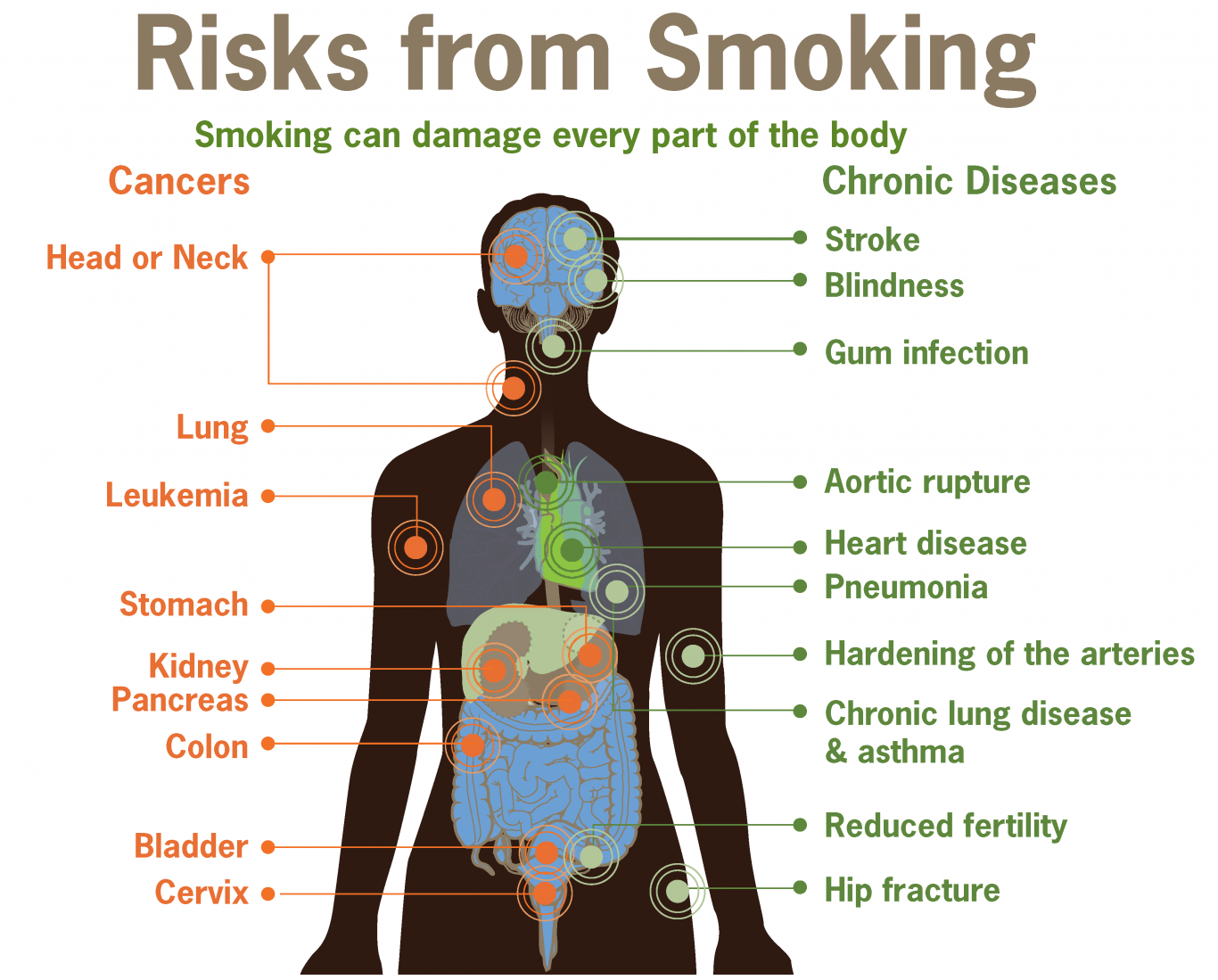 Image Credit: Wikepedia/Risks from Smoking
Smoking is a significant contributing factor to a range of health conditions, including stroke, ischemic heart disease, chronic obstructive pulmonary disease, lung cancer, Alzheimer's disease, and many others. The detrimental impact of smoking reaches well beyond respiratory health. For instance, certain toxic substances present in cigarettes, such as cadmium, have the potential to alter genes in sperm, with implications for future generations.
It is important to recognize that the consequences of smoking extend beyond individual health and can have far-reaching societal implications. Efforts to raise awareness about these risks and implement effective tobacco control measures remain crucial in mitigating the damaging effects of smoking on both individuals and communities.
Image Credit: Kasia
Tags
A new study published in Nature reveals that air pollution may drive cancerous mutations in lung cells—even among individuals who have never smoked. Scientists found that residents of highly polluted…